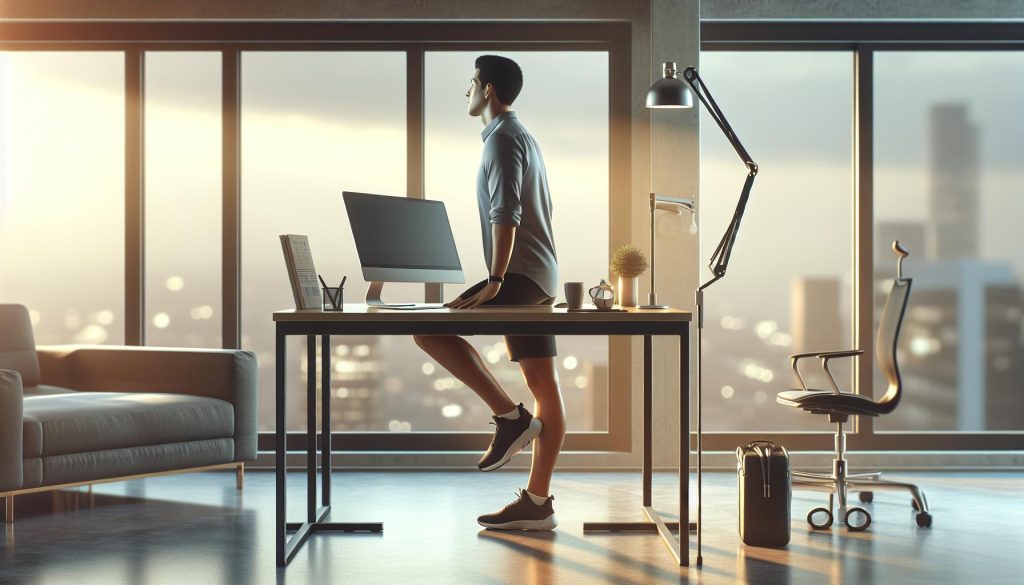
Did you know that standing desks can significantly improve your productivity and overall well-being? As more people shift to remote work, incorporating movement into your day becomes essential for maintaining both physical health and cognitive performance. Fortunately, you don’t need a gym membership to stay active. This article reveals 10 genius micro-workouts that you can easily integrate into your standing desk routine, helping you combat fatigue, enhance your focus, and promote a balanced work-life harmony. Whether you’re looking to alleviate stress or simply break up the monotony of sitting, these quick exercises are designed to fit seamlessly into your day. Join us as we explore simple ways to energize your work experience and invest in your health, one micro-workout at a time!
How a Standing Desk Enhances Your Health
The shift to a standing desk is more than just a change in furniture; it’s a powerful step toward enhancing your overall health and well-being. Research indicates that prolonged sitting can lead to numerous health issues, such as obesity, diabetes, cardiovascular disease, and even certain cancers. By incorporating a standing desk into your workspace, you invite movement and energy into your daily routine, which can significantly mitigate these risks. Standing not only promotes better posture but also encourages increased calorie burning and improved metabolic function compared to sitting.
Moreover, standing desks can have a profound impact on your mental acuity. Studies show that standing while working can enhance mood and energy levels, fostering a more engaged and productive work environment. When you stand, your body is more inclined to move, which may lead to spontaneous “micro-workouts” throughout the day. This not only helps combat the lethargy associated with extended sitting but also sharpens focus and cognitive performance. The dynamic nature of standing encourages breaks for stretching or light exercises, which can rejuvenate your mind and maintain high levels of concentration.
To maximize the health benefits of a standing desk, it’s important to adopt proper ergonomics. Make sure your desk height is adjustable, allowing you to keep your elbows at a 90-degree angle while your screen is at eye level. This adjustment minimizes strain on your neck and back, enabling you to stand comfortably for extended periods. Combine this with regular movement, such as walking meetings or simple stretches, to fully capitalize on the positive effects of standing while working.
Ultimately, transitioning to a standing desk fosters a proactive approach to your health. By blending movement into your workday, you not only enhance physical health but also invigorate your mind, leading to improved productivity and a greater sense of workplace satisfaction. Embracing this change can be an essential part of a holistic wellness strategy, benefiting both your body and mind in the long run.
The Science Behind Micro-Workouts Explained
Incorporating brief intervals of movement, or micro-workouts, into a standing desk routine can enhance both physical and cognitive health. Research reveals that short bursts of activity throughout the day can help combat the sedentary lifestyle that many professionals face. Engaging in these mini-exercises not only boosts your energy levels but also stimulates brain function, helps manage stress, and enhances overall well-being. The beauty of micro-workouts lies in their simplicity; they require minimal time commitments and can be seamlessly integrated into a busy workday.
Micro-workouts can encompass a variety of movements that target different muscle groups, promote circulation, and alleviate tension. Consider simple exercises like calf raises, desk squats, or torso twists. These can be performed during phone calls, while waiting for a document to print, or even in the few moments between meetings. The key is consistency-aim to incorporate at least one or two micro-workouts into every hour you spend at your standing desk. This approach encourages regular movement, which is essential for maintaining optimal health, especially in a workplace environment that often prioritizes productivity over physical activity.
Moreover, the impact of these brief workouts extends beyond immediate physical benefits. They can improve focus and mental clarity, acting as refreshers that break the monotony of a long workday. Engaging the body in movement sends vital signals to the brain, enhancing cognitive performance and potentially increasing creativity. As you become accustomed to integrating micro-workouts into your day, you may notice improved mood and reduced feelings of stress, making your workplace not just a space for productivity but also a hub for holistic health. Make a commitment to prioritize these moments; your body and mind will thank you.
Top 10 Standing Desk Micro-Workouts to Try
Incorporating movement into your workday is essential for revitalizing both body and mind. Standing desks offer a golden opportunity to fuse productivity with physical activity, primarily through micro-workouts that can be seamlessly integrated into your daily routine. These quick exercises not only enhance your physical health by improving circulation and reducing muscle stiffness, but they can also sharpen your focus, allowing you to tackle tasks more efficiently.
Here are ten effective micro-workouts you can try while standing at your desk:
Calf Raises
Stand with your feet hip-width apart and slowly rise onto your toes. Hold for a moment, then lower back down. Repeat for 10-15 reps to engage your calf muscles and improve circulation.
Desk Squats
With your feet shoulder-width apart, lower your body as if you are sitting back into a chair. Keep your back straight and knees aligned with your toes. Aim for 10-15 squats to strengthen your legs and glutes without requiring a lot of time.
Torso Twists
Stand with your feet shoulder-width apart and twist your upper body to the right, then to the left. This movement not only helps with spinal mobility but also activates your core. Perform for 30 seconds.
Shoulder Shrugs
Raise your shoulders up towards your ears and then release them down. Repeat 10-15 times to relieve tension in the shoulders and improve posture.
Wrist and Finger Stretches
Stretch your wrists by extending one arm in front and pulling back on the fingers with the other hand. Hold for 20-30 seconds on each side. This is particularly useful for people who type frequently.
Hip Flexor Stretch
Stand with feet hip-width apart, and step one foot back while bending the front knee. Keep your back straight and feel the stretch in your hip flexor. Hold for 20-30 seconds on each side to release lower back tension.
Side Leg Raises
Hold onto your desk for balance and gently raise one leg out to the side. Hold for a moment, then lower it back down. Do 10-15 reps on each leg to strengthen hip muscles and improve stability.
Seated Torso Stretch
While standing, place your hands on your hips and lean back gently to stretch your lower back. Hold for a few seconds, then return to a standing position. Repeat several times to relieve tension from prolonged sitting.
Chair Pose (Utkatasana)
Imagining you’re sitting in an invisible chair, bend your knees slightly while keeping your back straight and arms extended forward. Hold for 20-30 seconds to engage your core and lower body.
Walking Break
Every hour, take a few minutes to walk around your office or workspace. This simple act can dramatically improve blood flow and help you clear your mind.
Integrating these micro-workouts into your daily routine doesn’t require a significant time commitment; even a few minutes every hour can lead to substantial health benefits. As you begin to make these exercises a regular part of your workday, you’ll likely notice enhancements in your physical well-being, cognitive function, and overall energy levels-transforming your workspace into a hub of productivity and wellness.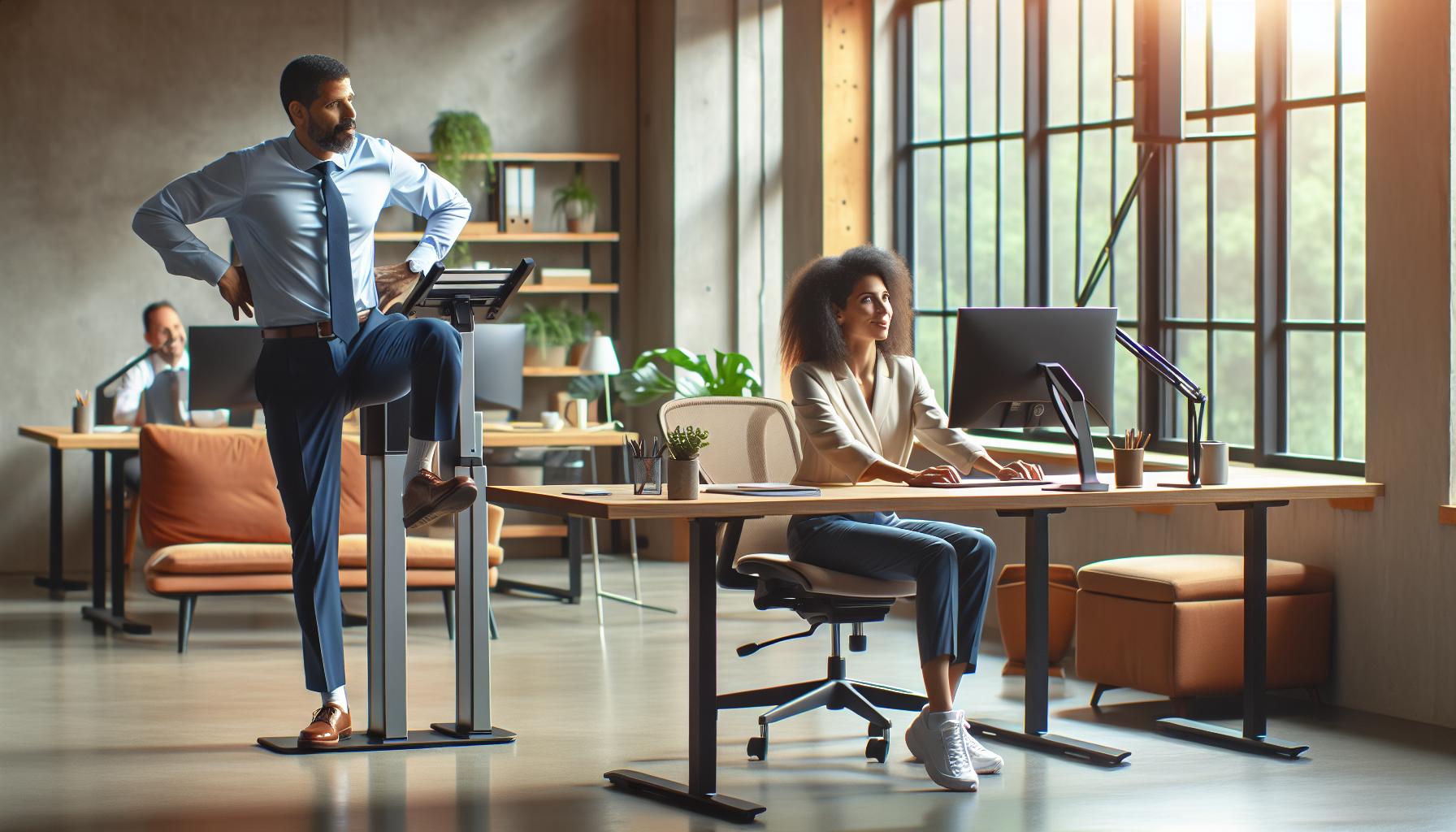
Quick Desk Exercises for Busy Professionals
There’s a growing recognition of the importance of integrating physical activity into our work lives, especially for busy professionals who often find it challenging to step away from their desks. The beauty of standing desks lies not only in their ergonomic benefits but also in the opportunity they create for quick and effective exercise. Incorporating swift desk exercises into your work routine can help maintain energy levels, enhance mental clarity, and promote overall well-being without requiring extensive time commitments.
Engaging in short bursts of movement throughout your day can be remarkably effective. Activities like calf raises and desk squats can be performed in a matter of minutes, allowing you to strengthen muscles while also boosting blood circulation. For example, while waiting for your coffee to brew or during a brief phone call, simply rise onto your toes or lower your body into a squat. These exercises not only engage your body but also break the monotony of prolonged sitting or standing.
In addition, consider adding torso twists and shoulder shrugs into your routine to alleviate tension and improve flexibility. These exercises are quick to execute-perfect for moments when you need to step away from screen-facing tasks. Just a minute or two of these movements can enhance posture, relieve tight muscles, and invigorate your mind, making you more productive and focused for the work ahead.
Ultimately, integrating quick desk exercises into your busy workday is about making small, achievable changes that add up over time. Set reminders to move, celebrate your progress, and experiment with a mix of exercises to keep things fresh and enjoyable. With each little effort, you’re not only boosting your physical health but also enhancing your cognitive capacity, paving the way for a more balanced and productive professional life.
Boosting Focus: Exercises for Cognitive Performance
To amplify cognitive performance, it’s essential to combine movement with mindful practices throughout your workday. Engaging in short, effective exercises stimulates not just physical health but also mental acuity, sharpening focus and combating the afternoon slump. Research suggests that even brief periods of exercise can lead to improved concentration and clearer thinking, making the integration of micro-workouts into your day a game-changer for productivity.
Exercise Techniques to Boost Focus
Incorporating specific movements can invigorate your mind. For instance, desk push-ups can be performed using the edge of your desk. Stand a few feet away, place your hands on the desk, and lower your body while keeping your feet planted. This not only energizes your muscles but increases blood flow, crucial for brain function. Another effective exercise is the seated leg lift, where you extend your leg out while sitting, holding for ten seconds before switching legs. This simple movement engages your core and stimulates circulation, enhancing alertness without a complete break from your tasks.
- Calf Raises: Stand tall and rise onto your toes; hold for a moment and lower back down. This improves circulation and can be done while on a call.
- Neck Rolls: Gently roll your head in a circle to relieve tension and improve mobility; a relaxed neck can significantly enhance focus.
- Forearm Stretches: Extend one arm out, palm up, and use your other hand to gently pull back on your fingers to stretch the forearm. This is excellent for balancing prolonged typing.
Mindfulness in Motion
In addition to exercises, integrating mindfulness techniques can further enhance cognitive performance during your micro-workouts. Try pairing movements with breathing exercises: inhale deeply while raising your arms overhead and exhale as you lower them. This practice oxygenates the brain, reducing stress and sharpening mental clarity.
Completing such mindful movements even for a few minutes can solidify the connection between physical activity and improved focus, enabling you to develop healthier cognitive patterns over time. By making these exercises a regular part of your day, you’re not merely breaking the cycle of inactivity but fostering a more resilient and alert mind, ready to tackle whatever challenges come your way. Embrace the opportunity, and allow your body to support your cognitive journey through strategic movements.
Incorporating Movement: The Importance of Active Breaks
Incorporating movement into your daily work routine is crucial for maintaining both physical and mental well-being, especially in an environment where long hours at a desk can lead to fatigue and decreased productivity. Evidence shows that active breaks-short, purposeful intervals of movement-can significantly enhance mood, energy levels, and cognitive performance. Taking just a few moments every hour to stretch, stand, or engage in a micro-workout not only refreshes the body but also aids in combating the distractions and stress that often accompany a busy workday.
One practical approach to integrating active breaks is to set a timer that prompts you to step away from your desk every 30 to 60 minutes. During these breaks, consider incorporating simple yet effective exercises that get your blood flowing and rejuvenate your mind. For instance, try a set of jumping jacks or a few squats. If you’re near your desk, desk push-ups or calf raises can be done conveniently, requiring minimal time and space. Aim to make these movements a regular part of your schedule; such consistency will not only create a new habit but also establish a culture of wellness in your workplace.
In addition to fostering physical health, active breaks can greatly contribute to improved cognitive function. Engaging in movement activates various brain regions, enhancing blood flow and oxygen delivery to the brain, which is essential for sharp focus and creative problem-solving. You might even practice a brief mindfulness exercise during these points of movement-such as a few deep breaths paired with stretches to increase mental clarity and reduce stress. This integrative approach not only counters the negative effects of prolonged sitting but also refocuses your thoughts, enabling you to return to your tasks with renewed vigor and clarity.
Consider exploring new routines as well. Perhaps after lunch, take a brisk walk around your office building or even around your living space if working remotely. This time away from your desk can provide the perfect mental reset, allowing for reflection and sparking new ideas. By embracing the importance of these active breaks, you’re not just investing in your physical health, but also optimizing your cognitive performance, ultimately creating a more enjoyable and productive work experience.
Ergonomic Tips for Safe Standing Desk Usage
Implementing a standing desk can significantly enhance your productivity and health, but it’s vital to do so with proper ergonomic principles in mind. An ergonomic workspace helps to minimize discomfort and prevent injury, allowing you to enjoy the benefits of standing while working. One of the most crucial aspects of setting up a standing desk is ensuring that it is at the correct height. Your elbows should ideally be at a 90-degree angle while typing, with your wrists in a neutral position. The monitor should be at eye level to minimize neck strain.
Another critical factor is your stance. Avoid locking your knees and instead shift your weight from one leg to another periodically. Consider using a footrest or anti-fatigue mat to provide support and comfort, which can help to reduce fatigue. Changing your position regularly and integrating simple exercises can enhance the benefits of your standing desk, keeping your muscles engaged and blood flowing. Small movements, like calf raises or gentle side stretches, can easily be incorporated throughout your day, providing both movement and a healthful break from static postures.
Consider establishing a routine that includes timed intervals for sitting and standing. For example, you might stand for an hour and then sit for 30 minutes, giving your body time to recover and adapt. This approach not only promotes physical comfort but also enhances focus and cognitive performance as you alternate between the two positions. Additionally, make use of desk accessories like a laptop stand or a document holder to maintain optimal body alignment and reduce neck and back strain.
Incorporating these ergonomic tips not only supports safe standing desk usage but also fosters a more productive and enjoyable work environment. By paying attention to your positioning and making small adjustments, you can effectively harness the benefits of a standing desk while maintaining your comfort and preventing long-term health issues.
Stretching Strategies to Alleviate Workplace Tension
In today’s fast-paced work environment, tension and stress can accumulate, particularly for those who spend long hours at a standing desk. Awareness of this tension is the first step towards alleviating it. Implementing effective stretching strategies not only promotes physical comfort but also enhances cognitive function, allowing you to work more efficiently and feel better overall.
Begin by incorporating simple stretches throughout your day to relieve accumulated tension in various muscle groups. For instance, consider the following techniques that can easily integrate into your standing desk routine:
Upper Body Stretches
- Shoulder Rolls: Stand with your feet shoulder-width apart. Lift your shoulders towards your ears, then roll them back and down. Perform this movement for 10 repetitions, focusing on relaxing your neck.
- Chest Opener: Clasp your hands behind your back and straighten your arms, gently lifting your hands away from your body. This will stretch your chest and shoulders, which often bear the brunt of prolonged standing and leaning over a desk.
Lower Body Stretches
- Calf Stretch: Place one foot behind you with the heel on the ground. Lean forward into the front knee to stretch the calf of the back leg. Hold for 15-30 seconds and switch sides. This stretch helps ease tightness that can result from standing too long.
- Quadriceps Stretch: While standing, grab your ankle and pull it towards your glutes to stretch the front thigh. Hold onto your desk or chair for balance, and hold for 15-30 seconds per leg.
Full Body Stretches
- Forward Bend: Stand tall and slowly hinge at the hips, bending forward and allowing your arms to dangle towards the floor. This releases tension in your back and neck. Hold for a few deep breaths before rolling up slowly.
- Torso Twist: Stand with your feet hip-width apart. Place your hands on your hips and gently twist your torso to the right and then to the left. This move enhances spinal mobility and can reduce stiffness.
Incorporating these stretching routines at your standing desk not only helps alleviate physical tension but also promotes mental clarity and focus. Remember to listen to your body and modify stretches to fit your comfort level. By prioritizing these small yet impactful movements, you create a more harmonious balance between work and wellness, paving the way for a healthier, more productive day.
Mindfulness and Movement: Improve Mental Clarity
Incorporating mindfulness into your work routine can significantly enhance mental clarity, helping you focus and boosting productivity throughout the day. Mindfulness is more than just a relaxation technique; it is a powerful tool that allows you to become more aware of your thoughts and feelings as you work, creating a space for improved cognition and creativity. This intentional focus can be seamlessly integrated with movement, particularly when you’re utilizing a standing desk, providing a dual benefit of physical activity and mental acuity.
To achieve this, begin with simple breathing exercises while standing. Take a moment to pause your tasks, close your eyes, and concentrate on your breath. Inhale deeply through your nose, hold for a count of three, and exhale slowly through your mouth. Repeat this for a few cycles. This practice can reduce stress levels and increase the oxygen supply to your brain, which is essential for optimal function. Research shows that mindful breathing combined with movement can improve cognitive performance, making it easier to tackle complex tasks after a few moments of focused breathing.
Another effective strategy is to incorporate movement-based mindfulness while working. For instance, when performing micro-workouts at your desk, combine physical exercises with moments of cognitive reflection. Start with simple exercises like calf raises or gentle squats while paying attention to your body’s sensations and the rhythm of your breath. This not only helps in physical health but also anchors you in the present moment, clearing your mind of distractions and allowing thoughts to emerge more clearly.
Consistency in these practices fosters a state of flow – a mental state where you are fully immersed in the activity at hand. By committing to short bursts of mindful movement interspersed throughout your workday, you create habits that promote not just physical well-being, but also a sharper, more agile mind. Engage in regular check-ins with yourself throughout the day, assessing your mental state and adjusting your mindfulness practices accordingly. This approach establishes a foundation for mental clarity, empowering you to navigate tasks with enhanced focus and vitality.
Creating a Personalized Micro-Workout Routine
Creating a micro-workout routine that fits your needs can be both empowering and invigorating. With the right approach, these short bursts of activity can seamlessly integrate into your workday, helping to boost not just physical health, but also mental clarity and productivity. Start by assessing your current work habits and identifying potential times for activity breaks. For example, you might consider setting a timer to remind you to engage in physical activity every hour, or you may opt for quick workouts during periods of downtime, such as while waiting for a conference call to begin.
An effective micro-workout routine is one that reflects your individual preferences and physical capabilities. To create yours, first select a variety of exercises that can be done without leaving your desk. Consider bodyweight movements like desk push-ups, chair squats, or seated leg lifts-these require minimal space and no equipment. To keep it engaging, rotate through a list of exercises. For instance, on Monday, focus on upper body movements; on Tuesday, incorporate lower body exercises; and reserve Wednesday for core stability. This variation helps prevent boredom and works different muscle groups, promoting overall fitness.
It’s advisable to make your micro-workouts practical and time-efficient. Start with just 1-5 minutes; research suggests that even minimal activity can enhance energy levels and cognitive performance. As you become accustomed to these mini-sessions, gradually increase the intensity or duration to match your comfort and capability. Documenting your routine can also provide motivation. By keeping track of your activities in a planner or app, you can celebrate small victories over time, reinforcing your commitment to an active lifestyle at your desk.
Lastly, always listen to your body. If you experience discomfort or fatigue, take a step back and adjust your routine accordingly. Remember that the goal of these micro-workouts is to enhance your work-life balance, reduce stress, and support your overall well-being. Incorporate mindfulness practices during these sessions; for instance, focus on your breath as you execute each movement. This harmonizes physical activity with mental engagement, creating a holistic approach to workplace wellness that pays dividends not just in health, but in productivity and happiness.
Harnessing Neuroplasticity for Better Work Habits
Harnessing the brain’s remarkable ability to adapt and rewire itself, known as neuroplasticity, can lead to the formation of healthier work habits and enhance your performance while using a standing desk. Engaging in micro-workouts at your desk not only helps to combat physical strain but also fuels your brain’s cognitive functions. Short bursts of activity can trigger neurotransmitter release, improving mood, focus, and overall mental clarity, essential for maintaining high productivity levels throughout the day.
To effectively incorporate the principles of neuroplasticity into your daily routine, focus on repetition and variety in your micro-workouts. The brain thrives on learning and adaptation, so introducing new exercises or variations regularly can stimulate neural connections. For example, if you perform standing calf raises consistently, try alternating them with desk push-ups or seated marches to engage different muscle groups and cognitive functions. This pattern of varied movement creates a dynamic work environment that keeps your brain engaged while reinforcing the benefits of physical activity.
Moreover, setting realistic and incremental goals can significantly enhance neural pathways associated with productivity and wellness. For instance, start with a goal of two 5-minute micro-workouts during your workday. As these sessions become habitual, increase their duration or frequency. This method utilizes the concept of ‘habituation,’ where your brain starts to normalize the behavior, making it easier to integrate these micro-breaks into your daily schedule. As you celebrate small victories in your fitness journey, you reinforce positive-feedback loops in your brain, ultimately paving the way for sustainable work habits.
Lastly, combining movement with mindfulness can amplify the benefits of neuroplasticity. As you engage in exercises, focus on your breath and the sensations in your body. This practice nurtures a deeper connection between your physical activity and mental presence, enhancing your ability to concentrate. Incorporating elements of mindfulness during your micro-workouts not only strengthens mental clarity but also helps in stress management, creating a holistic approach to workplace wellness that can lead to long-term improvements in both physical and cognitive health.
Success Stories: Transforming Health with Standing Desks
In workplaces around the globe, the shift towards standing desks is not just a trend; it’s transforming employee health and productivity in remarkable ways. Take Sarah, for instance, a marketing manager who struggled with back pain and fatigue from long hours of sitting. After transitioning to a standing desk, combined with micro-workouts such as standing leg lifts and desk squats, she noted a significant reduction in discomfort. Her energy levels soared, allowing her to maintain focus during meetings instead of battling a post-lunch slump. This newfound vitality not only enhanced her performance but also encouraged her colleagues to adopt similar practices, fostering a culture of wellness within her team.
Another inspiring story is that of James, a software developer who was constantly battling stress and anxiety during his 12-hour coding sessions. By incorporating micro-workouts like trunk twists and shoulder rolls at his standing desk, he began to experience not just physical benefits but also mental clarity and reduced stress levels. His ability to concentrate improved, and he found that short movement breaks allowed him to return to tasks with greater creativity and enthusiasm. James even started a workplace challenge, encouraging his teammates to share their micro-workout experiences, which created a supportive community centered around mutual health goals.
The implementation of standing desks coupled with regular micro-workouts is backed by research showing that such practices can enhance cognitive function. Regular movement stimulates blood circulation and releases endorphins, contributing to improved mood and focus. Employees like Sarah and James epitomize the potential of integrating standing desks and movement into daily routines, demonstrating that even modest changes can lead to substantial health benefits. Encouraging this new way of working can also lead to long-term habits that prioritize wellbeing, ultimately resulting in a happier, healthier workforce.
To fully embrace the benefits of standing desks, consider keeping a log of your micro-workouts, just like Sarah and James did. This practice helps set achievable fitness goals and maintain accountability. Remember, the journey to improved health is not solely about physical changes-it’s also about fostering a positive workplace culture that supports holistic wellbeing. When individuals share their progress and celebrate small victories together, it creates a ripple effect of motivation that can inspire continuous transformation within any workspace.
Faq
Q: What are some quick exercises I can do at my standing desk?
A: Some quick exercises for a standing desk include calf raises, desk push-ups, chair squats, and marching in place. These micro-workouts can be done in short bursts throughout your workday to boost circulation and energy levels. For more alternatives, check out the “Top 10 Standing Desk Micro-Workouts to Try” section.
Q: How often should I take breaks to exercise at my standing desk?
A: Ideally, you should aim to take a break every 30-60 minutes to perform micro-workouts or stretches. This helps reduce fatigue and increases productivity. Incorporating active breaks throughout the day is essential for maintaining both physical and mental health.
Q: What are the benefits of exercising at a standing desk?
A: Exercising at a standing desk enhances your overall health by improving posture, reducing back pain, and increasing energy levels. It also helps maintain focus and cognitive performance throughout the workday, fostering a better work environment.
Q: Can I perform yoga at my standing desk?
A: Yes, you can definitely perform yoga at your standing desk. Simple poses such as tree pose, forward bends, or balance exercises can be incorporated to promote stretching and relax tension. These movements are great for enhancing both physical and mental well-being.
Q: How do micro-workouts improve cognitive performance?
A: Micro-workouts boost cognitive performance by increasing blood flow to the brain, elevating mood and energy levels. Engaging in physical activity, even briefly, enhances focus, creativity, and overall brain health, making micro-workouts an excellent addition to your work routine.
Q: What ergonomic tips should I follow while exercising at my standing desk?
A: To ensure safety while exercising at a standing desk, maintain a neutral spine, adjust the desk height so your elbows are at a 90-degree angle, and wear supportive footwear. This helps prevent strain or injury while performing your micro-workouts.
Q: Are there any specific stretches I can do to alleviate workplace tension at a standing desk?
A: Yes, effective stretches include shoulder rolls, neck stretches, and wrist stretches. These exercises can significantly relieve workplace tension and promote flexibility. Refer to the “Stretching Strategies to Alleviate Workplace Tension” section for more detailed instructions.
Q: How can I create a personalized micro-workout routine at my standing desk?
A: To create a personalized micro-workout routine, start by identifying your fitness goals and preferences. Mix different types of exercises, such as strength, stretching, and cardio, and allocate specific times during your workday for movement. Tailoring your routine will keep you motivated and engaged.
Key Takeaways
As you incorporate these 10 genius micro-workouts into your day, remember that staying active at a standing desk isn’t just about the exercises-it’s about enhancing your overall workplace wellness. By integrating these quick routines, you can boost your energy, improve cognitive performance, and manage stress effectively. Don’t wait to make a change; start today and feel the difference!
For further insights, explore our guides on creating ergonomic workspaces and learn how to maximize your cognitive health through smart dietary choices. If you’re looking for personalized strategies or products to support your journey, check out our dedicated resources. Join our newsletter to stay updated on the latest tips for a healthier work-life balance!
Engage with us-share your thoughts in the comments below, and let’s continue the conversation around workplace wellness. Remember, every small action can lead to significant improvements in your health and productivity. Your journey to a more active and fulfilling workday starts now!