
Judaism, rich in history and tradition, raises an intriguing question: Is it simply a religion, or does it also encompass a unique ethnicity? This dual identity impacts millions around the world, influencing culture, community, and personal identity. Understanding how Judaism functions as both a faith and a heritage is essential for appreciating its role in contemporary society. This exploration promises not only to clarify definitions but to delve into how these aspects affect Jewish life today. As you read on, you’ll uncover insights that connect religious beliefs with ethnic identity, fostering a deeper understanding of this significant topic. Join us as we navigate through Brainly’s insights on whether Judaism is an ethnicity, a religion, or a fascinating blend of both.
Understanding Judaism: Ethnicity vs. Religion
Judaism presents a fascinating intersection of ethnic identity and religious practice, making it a unique case in discussions surrounding ethnicity versus religion. At its core, Judaism is both a faith and a cultural identity, tied together by shared history, traditions, and beliefs. Many Jews view their connection to Judaism not only through the lens of religious observance but also through the customs and cultural experiences that shape their community. For individuals navigating this duality, questions often arise: Is one born into Jewish ethnicity, or can one fully embrace Jewish identity through faith alone?
Judaism is often described as an ethnoreligion, meaning that its community is formed by both ethnic lineage and religious belief. This complex identity can be seen in practices such as the recognition of Jewish heritage through matrilineal descent, which establishes Jewish identity through the mother. Yet, conversion to Judaism, while requiring acceptance of Jewish religious tenets, is also a process that enables individuals from diverse backgrounds to join the Jewish community, illustrating how religious belief can bridge gaps in ethnic identity.
This overlapping dynamic invites introspective reflection on what it means to be Jewish in contemporary society. Jews across the globe exhibit a rich tapestry of cultural practices, from the observance of Shabbat and dietary laws to participation in community events, which underscore the integration of religious beliefs and cultural identity. Consequently, while religious observance can affirm one’s Jewish identity, cultural practices and personal narratives play equally crucial roles in expressing and understanding what it means to belong to the Jewish people.
Historical Context of Judaism as a Religion
Judaism’s historical context reveals a journey that intertwines both the development of religious beliefs and the evolution of cultural identity. Emerging from the ancient Hebrews, Judaism is one of the oldest monotheistic religions, establishing itself around 3,000 years ago. The pivotal moments in its history, such as the covenant at Mount Sinai where the Torah was given to Moses, mark the foundational principles that shaped not only religious practices but also the social and cultural frameworks within which Jewish communities would flourish. This scripture has been instrumental in guiding ethical practices and communal responsibilities, linking followers through shared laws and traditions that continue to resonate today.
In the aftermath of significant events like the destruction of the Second Temple in 70 CE, Judaism experienced a transformative shift from temple-based worship to a focus on study, prayer, and community life. This transition laid the groundwork for Rabbinic Judaism, emphasizing the authority of the Torah and the interpretation of Jewish law. The synagogue emerged as a central institution, nurturing a vibrant religious culture that included not just worship but communal gatherings and educational activities. Through this evolution, Judaism solidified its identity as both a religion and a cultural heritage, emphasizing community and collective memory.
The interplay between ethnicity and religion within Judaism is profound. As Jews faced numerous diasporas, they adapted and blended their practices with local cultures while maintaining a distinct identity rooted in their shared history. This resilience can be seen in the customs and rituals that have been preserved, such as dietary laws and festivals that celebrate historical events. Thus, while Judaism is a religion characterized by specific beliefs and practices, it also serves as an ethnicity with a rich heritage that shapes the identities of its followers, enabling them to navigate their place within larger societies.
The historical trajectory of Judaism illustrates its dual identity and emphasizes the idea that understanding what it means to be Jewish involves delving into both spiritual beliefs and cultural expressions. This nuanced understanding continues to inform discussions about Jewish identity today, as individuals increasingly explore the intersections of faith, heritage, and personal experience in their lives.
The Ethnic Identity Within Judaism Explained
The ethnic identity within Judaism is a multifaceted concept that weaves together shared heritage, cultural practices, and historical experiences. Unlike many religions that may solely define their members through belief systems, Judaism incorporates an ethnic aspect, thus allowing for a broader understanding of what it means to be Jewish. For many, being Jewish is not just about adherence to religious doctrines but also about belonging to a people with a distinct historical narrative, common ancestry, and a set of cultural practices.
One key aspect of Jewish ethnic identity is its emphasis on community and collective memory. This is vividly illustrated through customs such as the Sabbath (Shabbat), dietary laws (kashrut), and the celebration of holidays like Passover and Hanukkah. These rituals not only serve as religious observances but also reinforce community bonds and cultural identity among Jews worldwide. The experience of persecution throughout history, including events like the Holocaust, has further shaped a collective consciousness among Jews that defines their ethnic identity today. This shared history fosters a sense of solidarity, geography notwithstanding.
Moreover, the concept of Jewish ethnicity encompasses various Jewish groups, including Ashkenazi, Sephardi, and Mizrahi Jews, each with their unique cultural practices, languages, and traditions. This diversity highlights the adaptability of Jewish identity as it interacts with different cultures while maintaining its core elements. Many Jews identify as such through their heritage and cultural practices, even if they do not practice the religion actively.
To understand the ethnic identity within Judaism, it’s crucial to recognize that lineage plays a significant role. Jewish identity can be passed down matrilineally according to traditional Jewish law, meaning that an individual is often considered Jewish if their mother is Jewish, regardless of their level of religious observance. This biological aspect underscores the inseparable links between ethnicity and religion, suggesting that twin identities can coexist in a way that enriches both the individual’s experience and the broader Jewish community.
Thus, while Judaism is indeed a religion characterized by its beliefs, texts, and practices, it is equally an ethnic identity that connects individuals to a broader narrative of resilience, culture, and shared history. This duality invites further exploration into how Jews navigate their identities in an increasingly diverse global landscape.
Theological Tenets: Faith vs. Heritage
Judaism presents a unique tapestry woven from both theological beliefs and cultural heritage, making it a compelling subject of exploration regarding the intersection of faith and ethnicity. At its core, the theological tenets of Judaism emphasize a set of beliefs grounded in the covenant between God and the Jewish people, encapsulated in sacred texts such as the Torah. This scriptural foundation instills values such as justice, compassion, and the pursuit of knowledge, creating a spiritual framework that governs the moral and ethical behavior of its adherents.
However, the heritage aspect of Judaism cannot be overlooked, as it deeply influences how Jewish identity is perceived and practiced. For many individuals, their connection to Judaism stems as much from cultural traditions, historical narratives, and family lineage as from religious observance. This duality is exemplified in the diverse expressions of Jewish identity: from those who actively engage with religious practices, such as attending synagogue services and observing dietary laws, to individuals who identify culturally with Jewish traditions, participating in communal celebrations like Passover or Hanukkah without strictly adhering to religious laws.
Understanding this complex relationship invites further reflection on how faith and heritage coalesce. Jewish law (Halakha) provides a structure within which practices are observed, but cultural elements often enhance and evolve those practices. For example, how Jews of different backgrounds, such as Ashkenazi and Sephardi, celebrate holidays can reflect their unique cultural contexts, showcasing the adaptability of their heritage while maintaining core religious tenets. Thus, the interpretation of what it means to be Jewish can vary significantly, informed by both individual beliefs and communal histories.
Ultimately, recognizing Judaism as both a faith and a heritage opens up a more enriched understanding of Jewish identity. It allows for a more inclusive discussion about the various ways individuals connect-or reconnect-to their Jewish roots, whether that is through belief, cultural practices, or both. This layered identity provides an avenue for personal expression and community belonging, reinforcing the idea that being Jewish is not confined solely to religious observance but can also flourish in the diverse tapestries of lived experiences and shared histories.
Cultural Practices and Their Impact on Identity
Cultural practices play a vital role in shaping Jewish identity, highlighting the intricate balance between ethnicity and religion. These practices often serve as communal touchstones that connect individuals to their heritage, fostering a sense of belonging and continuity. For many Jews, cultural observances-such as dietary laws (kashrut), holiday celebrations, and traditional rituals-are deeply ingrained in their lives, transcending strict religious observance and intertwining with personal and communal identities.
The significance of cultural practices can be observed in festive celebrations like Passover, where the retelling of the Exodus story during the Seder meal becomes a powerful narrative that reinforces Jewish identity. Participants engage in rituals that span generations, such as the symbolic act of eating matzah and bitter herbs, which not only commemorate historical events but also invoke collective memories and values such as resilience and freedom. Such practices convey a profound connection to both ancestry and faith, allowing individuals to celebrate their Jewish identity in diverse and meaningful ways.
Moreover, the diversity of cultural expressions within Judaism-ranging from the melodies of Ashkenazi klezmer music to the vibrant flavors of Sephardic cuisine-illustrates how identity is crafted through local customs, familial traditions, and, crucially, individual experiences. This rich tapestry enables Jewish cultural identity to remain dynamic and adaptive, evolving while remaining anchored in sacred texts and communal narratives. By participating in cultural practices, individuals affirm their place within the larger Jewish community, often finding connection and support in shared experiences that foster both pride and belonging.
In contemporary settings, the intersection of cultural practices and identity continues to evolve. Many Jews engage in cultural rituals without the accompaniment of religious observance, reflecting a broader understanding of what it means to be Jewish. This adaptability allows for a more inclusive exploration of identity, accommodating those who identify more strongly with cultural or ethnic aspects rather than the religious dimensions of Judaism. Ultimately, cultural practices not only reinforce Jewish identity but also empower individuals to navigate their relationships with tradition, community, and self in a rapidly changing world.
Judaism Around the World: Diverse Perspectives
Across the globe, Judaism expresses itself through a rich tapestry of cultural variations and identities, showcasing the religion’s adaptability and the diversity of the Jewish experience. From the vibrant street festivals of the Jewish communities in Brazil to the solemnity of Yom Kippur observed in Israel, different regions contribute unique flavors to a shared faith. A captivating aspect of Judaism is its ability to assimilate local traditions while maintaining core religious principles, making the experience of being Jewish incredibly varied depending on the geographic and cultural context.
In North America, for example, Jewish identity often intertwines significantly with American culture. Jewish communities celebrate national holidays alongside their own, creating a multifaceted identity that respects both Jewish traditions and American values. This dual identity can sometimes lead to an exploration of what it means to be Jewish in a predominantly secular society, pushing individuals to define their faith and cultural heritage on their own terms. Meanwhile, in Europe, particularly in Eastern Europe, the impact of historical events such as the Holocaust looms large. Here, Judaism is often seen through the lens of survival and resilience, with commemorative practices offering both a reminder of the past and a celebration of life.
In Israel, Jewish identity is significantly shaped by the country’s unique social and political landscape. The diverse population includes a blending of immigrants from various countries, each bringing their own customs and traditions. This mixture enriches the cultural fabric, leading to dynamic conversations about religious observance, ethnicity, and secularism. Here, the question of whether Judaism is primarily a religion or an ethnicity becomes increasingly complex, as individuals navigate their identities within the context of a modern nation-state that embodies both.
Through the lens of different perspectives, it becomes apparent that Judaism is not limited to a singular interpretation; it is a vibrant mosaic shaped by historical circumstances, cultural exchanges, and individual experiences. This global variability encourages a deeper understanding of what it means to be Jewish today, fostering a sense of connection that resonates across continents and generations. As Jewish communities continue to adapt to changing societal landscapes, the dialogue surrounding Jewish identity remains vibrant and thought-provoking, reflecting the challenges and triumphs of navigating ethnicity, culture, and faith in an interconnected world.
Intersection of Religion and Ethnicity in Judaism
The complexity of Jewish identity stems from its dual nature as both a religion and an ethnicity, leading to discussions that often invoke passionate debate and personal reflection. At its core, Judaism is not solely a collection of beliefs and rituals but also a lineage and cultural heritage that binds its followers together across generations. This intertwined existence poses significant questions about how individuals define their Jewish identity-whether through faith, bloodlines, cultural practices, or a combination thereof.
One example of this intersection can be seen in the experience of Jews around the world, where practices vary based on cultural influences and historical context. In communities such as the Sephardic Jews in Spain or the Ashkenazi Jews in Eastern Europe, distinct customs and traditions have evolved alongside religious observance, enriching the Jewish experience globally and demonstrating how normative practices can be deeply rooted in ethnic identity. Importantly, this means that many individuals might identify as Jewish even in the absence of religious observance, citing cultural education, historical awareness, and familial ties as integral aspects of their identity.
Many contemporary discussions focus on the notion of Jewish peoplehood, which encompasses the idea that being Jewish can be understood as belonging to a collective that is both religious and ethnic. Acknowledging this duality allows for a more inclusive understanding of what it means to be Jewish, highlighting the diversity within Jewish identity itself. Multiple perspectives illuminate how individuals navigate their identities in a world that increasingly values personal expression over rigid definitions. Practices such as community celebrations and cultural events provide spaces where religious and ethnic identities converge, fostering an environment where one can feel connected to both a collective past and present.
Through this lens, the intersection of religion and ethnicity within Judaism is not merely a point of debate but a dynamic and lived reality. The ongoing dialogue regarding these identities continues to evolve in response to societal changes, reinforcing the idea that Judaism is inherently vibrant and adaptable, shaped by those who embody it. As the conversation surrounding identity progresses, it remains crucial for individuals to explore and celebrate both the religious and ethnic dimensions of their Jewish experience, finding a balance that speaks to their personal journey and community belonging.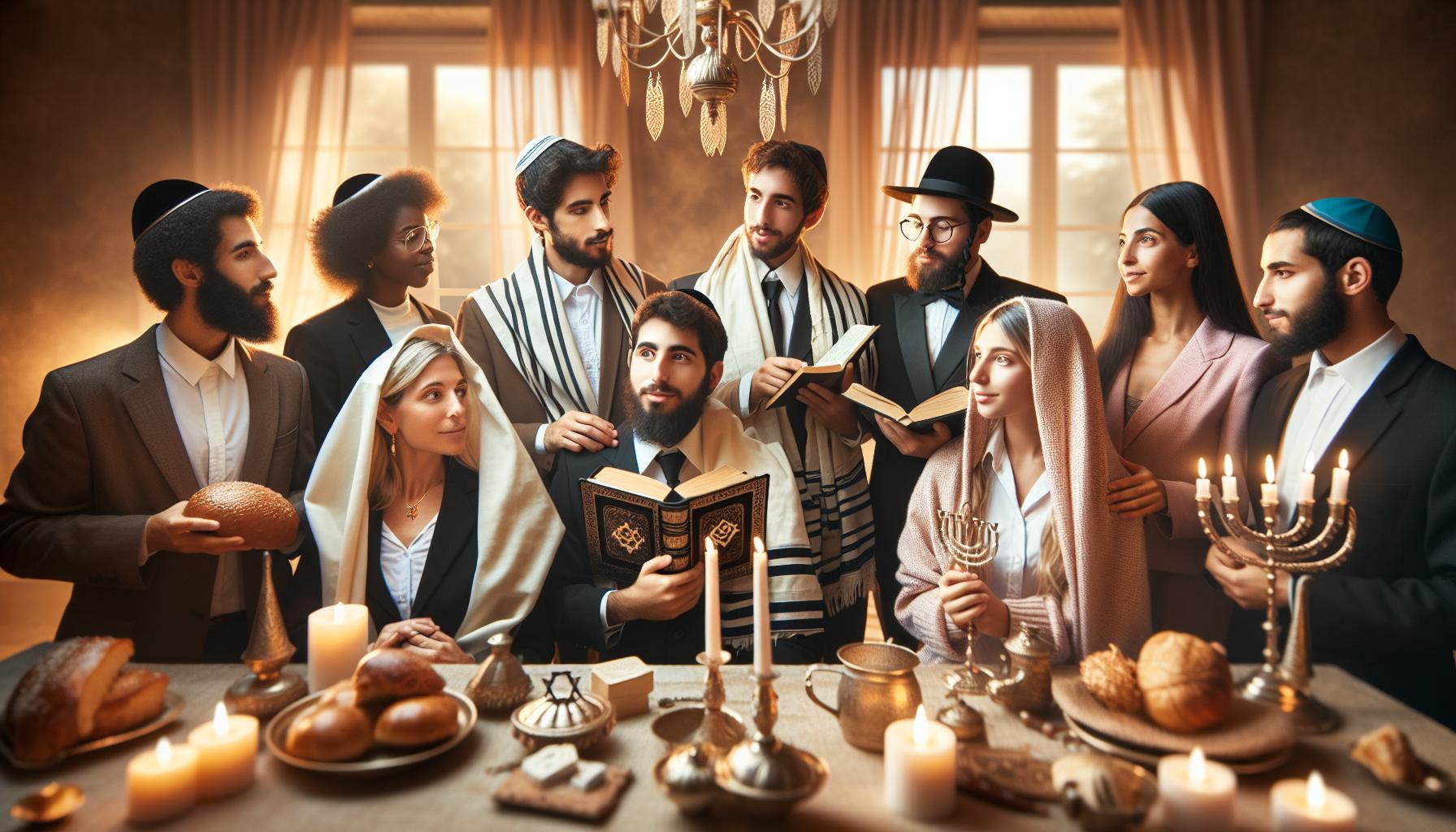
Debates Among Scholars: Key Perspectives
The question of whether Judaism is primarily a religion or an ethnicity ignites passionate scholarly debates, reflecting the multifaceted nature of Jewish identity. Scholars approach this topic from various angles, often emphasizing the intersection between religious practices, cultural identities, and historical contexts. For instance, some argue that Judaism cannot be neatly classified as either, as it embodies characteristics of both a faith and a people. This complexity invites a closer examination of how identity is perceived and lived within diverse communities.
One key perspective posits that Jewish identity is primarily a cultural phenomenon with religious elements integrated. This view is often supported by the observation that many individuals identify as Jewish through shared cultural practices, language (such as Yiddish or Hebrew), and communal history-even if they do not actively participate in religious rituals or beliefs. This notion is particularly significant in discussions about secular Jews, who strongly identify with their Jewish heritage, emphasizing culture over theology. A practical example can be seen in the celebrations of cultural events like Passover or Hanukkah, where the focus may be more on familial and cultural traditions than on religious observance.
In contrast, another scholarly viewpoint emphasizes the centrality of religious observance and belief in defining Jewish identity. This perspective underscores that the religious framework provided by Jewish law (Halakha) and teachings from sacred texts like the Torah form the backbone of what it means to be Jewish. Proponents of this view argue that Jewish faith fosters a sense of unity and purpose among its practitioners and serves as a vital component in maintaining Jewish identity, especially in the face of historical challenges.
Ultimately, the discourse surrounding these key perspectives highlights an essential aspect of Jewish identity: its adaptability and resilience. The dynamic interplay of religion and ethnicity in Judaism illustrates how individuals navigate this duality in their lives. Whether through communal observance, cultural expression, or personal beliefs, the search for identity remains a nuanced and personal journey for many within the Jewish community. As scholarly debates continue, they open up pathways for understanding the rich tapestry that constitutes Judaism, encouraging individuals to explore their identity amidst a landscape that values both heritage and belief.
Personal Narratives: Identity and Belonging
Exploring personal narratives within the Jewish community reveals the deeply intertwined nature of identity and belonging, highlighting how individuals navigate the dual aspects of Judaism as both a religion and an ethnicity. Many Jewish individuals share journeys that reflect a rich tapestry of cultural heritage, religious beliefs, and personal experiences. For instance, a secular Jew may find a profound sense of identity through cultural practices such as food traditions, family gatherings, and the annual celebration of holidays, which are often more about heritage than observance of religious law. The stories of these individuals underscore the importance of cultural connection, illustrating that for many, Jewish identity is as much about shared history and community as it is about faith.
Conversely, those who are more observant often describe their Jewish identity as inseparable from their spiritual practices. They may recount experiences from a young age-attending synagogue on Shabbat, studying the Torah, or participating in communal prayers-that guide their understanding of what it means to be Jewish. Through these rituals, a sense of unity and belonging can be cultivated, fostering community ties that reinforce their identity. Personal testimonies might highlight moments during religious milestones like bar or bat mitzvahs, where the interplay of faith and community becomes acutely felt.
It’s important to recognize that these personal narratives often reveal a dynamic interplay of identity. A Jewish individual may identify strongly with their ethnic roots while simultaneously engaging in religious practices, reflecting the multifaceted nature of belonging. For instance, someone may feel a connection to the historical struggles of the Jewish people alongside a modern practice of celebrating cultural festivals in their own unique way. This duality not only enriches their personal narrative but also enhances community cohesion, as shared stories and experiences lay the groundwork for mutual understanding and acceptance.
Ultimately, these individual stories contribute significantly to the broader dialogue on Jewish identity, illustrating that the journey towards understanding oneself is often marked by a blend of cultural pride and religious significance. This complex interplay is vital in fostering a sense of belonging, allowing individuals to walk confidently in both their ethnic and spiritual identities while navigating a world that may view them through a singular lens. As more voices join this conversation, they collectively illuminate the rich diversity within Judaism, encouraging deeper connections and appreciation for its complexities.
Judaism’s Role in Modern Society and Identity
In today’s globalized world, the exploration of identity within Judaism underscores the fascinating interplay of culture, religion, and ethnicity. With about 14 million Jews worldwide, their experiences reflect a unique convergence of historical legacy and contemporary relevance. As society continues to evolve, so do the roles that Judaism plays in shaping individual and communal identities, fostering connections that transcend mere categorizations of ethnicity or religion.
Judaism serves not just as a religious framework but also as a vital platform for cultural expression and communal belonging. For many, participating in Jewish traditions-be it through celebrating Passover, lighting the menorah during Hanukkah, or gathering for Shabbat dinners-provides a profound context for connecting with ancestral roots. These customs foster a sense of continuity and shared identity, enabling individuals to engage with their heritage meaningfully. This cultural affiliation often strengthens bonds within the community, as families pass down traditions, stories, and values that define who they are.
Moreover, the modern Jewish community is characterized by its diversity, manifesting in various beliefs and practices across different denominations, including Orthodox, Conservative, Reform, and secular Jewish movements. This plurality not only enriches the cultural tapestry of Judaism but also invites ongoing conversations regarding identity and belonging. For instance, secular Jews may navigate their Jewish identity more through cultural events and shared history than through religious observance. In contrast, others may find deep spiritual fulfillment in religious practices. This dynamic spectrum allows for an individual interpretation of what it means to be Jewish today, encouraging acceptance and understanding within the community.
Notably, the tension between ethnicity and religion is not merely a theoretical debate; it has practical implications for how Jewish individuals interact with broader societal contexts. In multicultural societies, the visibility of Jewish practices can foster dialogue and collaboration among diverse groups while also posing challenges such as anti-Semitism and misunderstandings. Addressing these issues involves not only commitment to education and advocacy but also a recognition of the rich complexities inherent in Jewish identity. As communities continue to engage with these themes, they pave the way for a more inclusive society, where the multifaceted nature of Judaism as both an ethnicity and a religion is celebrated and understood.
Through these reflections, it becomes evident that Judaism’s role in modern society is crucial in defining individual and collective identities. By embracing the intricate blend of cultural heritage and religious practice, Jews can navigate their identity in a manner that fosters resilience and connection amid an ever-changing world, ensuring that both the spiritual and the cultural aspects of their identity remain vibrant and relevant for future generations.
Common Misconceptions About Jewish Identity
Despite the rich tapestry of Jewish identity, several misconceptions can cloud understanding. One prevalent idea is that Jewish identity strictly falls within a single category, either as a religion or an ethnicity. However, the reality is that Judaism encompasses both elements. Jewish individuals may identify primarily with the Jewish faith, observing religious practices and laws, while others may embrace their Jewish heritage through cultural traditions, literature, and historical narratives, often without religious observance. This duality is essential in recognizing the comprehensive nature of Jewish identity.
Another common misconception is the assumption that all Jews share a homogeneous culture or set of beliefs. In truth, the Jewish community is incredibly diverse, spanning various cultural backgrounds, languages, and denominations. From Orthodox to Reform and secular Jews, there exists a remarkable spectrum of belief systems and practices. This diversity enriches Jewish life, as each group contributes unique perspectives and traditions while still maintaining a shared identity rooted in common historical experiences and values.
Additionally, some people mistakenly believe that one must be born into a Jewish family to be considered Jewish. While matrilineal descent traditionally defines Jewish identity, the concept of conversion is also vital. Many individuals choose to convert to Judaism after deep personal exploration and commitment to its beliefs and practices. These converts add to the richness of the Jewish community, demonstrating that Jewish identity can be both inherited and chosen.
Lastly, there’s a notion that Jewish identity can be easily categorized into merely religious practices or ethnic heritage, ignoring the complexities in between. For many Jews, identity is a blend of family customs, spiritual beliefs, and cultural heritage. This multifaceted nature reflects a dynamic relationship between tradition and modernity, showcasing how Jewish identity continues to evolve while remaining anchored in historical significance.
Understanding and addressing these misconceptions can foster greater empathy and acknowledgment of the diverse experiences within the Jewish community, encouraging respectful dialogue and connection.
Future Trends: The Evolution of Judaism
In an ever-globalizing world, the evolution of Judaism is characterized by a dynamic interplay between tradition and modernity. Many Jewish communities are increasingly embracing a pluralistic approach that acknowledges the diverse expressions of Jewish identity. This evolution can be seen in various facets, including interfaith dialogues, community engagement, and the rise of digital platforms that facilitate connections among Jews around the globe. As cultural, social, and technological landscapes shift, the ways in which Jewish identity is expressed and understood are also transforming.
Adaptation and Integration
Judaism is adapting to contemporary society, integrating modern values while maintaining core beliefs. One notable trend is the acceptance and recognition of LGBTQ+ individuals within various Jewish denominations. Progressive movements, such as Reform and Reconstructionist Judaism, encourage inclusivity, allowing for a re-examination of traditional interpretations of scripture. This openness challenges previously held beliefs, demonstrating that Jewish values can evolve with societal changes, thus expanding the definition of what it means to be Jewish.
Cultural Renaissance
Another significant trend is a resurgence of interest in Jewish culture and heritage, particularly among younger generations. Many Jews are reconnecting with their roots through cultural festivals, culinary experiences, and artistic expressions. This cultural renaissance often transcends strict religious observance, focusing instead on the celebration of shared history and communal identity. Educational initiatives, such as Jewish learning programs that combine history, ethics, and creative expression, are enhancing this renewed interest.
Global Perspectives
Judaism is also becoming increasingly influenced by global perspectives. As Jews from different cultural backgrounds interact more than ever-thanks to social media and globalization-the defining characteristics of Jewish identity are becoming more inclusive. Diverse practices and beliefs from various cultures enrich the Jewish experience, making it multifaceted. From Sephardic traditions to the rituals of Ethiopian Jews, these global influences contribute to a broader understanding of what it means to be part of the Jewish community today.
In summary, the future of Judaism embodies a blend of respecting tradition while embracing change. By fostering inclusivity, promoting cultural connections, and integrating diverse global influences, Judaism continues to evolve, allowing for a vibrant and multifaceted identity that resonates with both adherents and the wider community. This evolution reflects the ongoing dialogue between faith and heritage, ensuring that Jewish identity remains robust and relevant in a rapidly changing world.
Faq
Q: Is Judaism considered a religion, ethnicity, or both?
A: Judaism is both a religion and an ethnicity. As a religion, it encompasses the beliefs and practices outlined in the Torah. Ethnically, it refers to the Jewish people, who share a common heritage and culture, revealing the dual identity that many Jews hold.
Q: How does Jewish ethnicity differ from other ethnicities?
A: Jewish ethnicity is unique due to its strong ties to religious traditions, laws, and practices. Unlike some ethnicities defined solely by geography, Jewish identity intertwines with religious beliefs, cultural practices, and historical experiences, making it distinct within the broader context of ethnicity.
Q: Can someone be Jewish without practicing the religion?
A: Yes, individuals can identify as Jewish ethnically without adhering to religious practices. Jewish identity includes cultural and historical aspects that may exist independently of religious observance, highlighting the complexity of Jewish identity in contemporary society.
Q: What role does cultural practice play in Jewish identity?
A: Cultural practices such as holidays, rituals, and community gatherings significantly shape Jewish identity. These practices foster a sense of belonging and heritage, often transcending religious observance, and contribute to the broader understanding of what it means to be Jewish.
Q: Why is there a debate about Judaism as an ethnicity or a religion?
A: The debate arises from the intertwined nature of Jewish identity, which encompasses religious and ethnic elements. Scholars and community members discuss varying definitions based on cultural, historical, and personal experiences, emphasizing the complexity of identity within Judaism.
Q: How do modern perspectives view Jewish identity?
A: Modern perspectives recognize Jewish identity as multifaceted, encompassing both religious and ethnic dimensions. This view acknowledges diversity within the Jewish community, reflecting varied practices, beliefs, and cultural expressions that shape individual identities today.
Q: Are there different branches or denominations within Judaism?
A: Yes, Judaism has several branches, including Orthodox, Conservative, Reform, and Reconstructionist movements. Each branch interprets Jewish texts and practices differently, contributing to a diverse understanding of Jewish identity and religious observance.
Q: What misconceptions exist about Jewish identity?
A: Common misconceptions include the idea that Jewish identity is solely religious or that all Jews practice the same beliefs. The reality is that Jewish identity can be both religious and ethnic, with a wide range of practices and beliefs among individuals within the community.
For more insights on these topics, explore sections like “Intersection of Religion and Ethnicity in Judaism” and “Common Misconceptions About Jewish Identity” in the main article.
In Conclusion
In exploring whether Judaism is an ethnicity or a religion, we’ve uncovered the complex interplay between cultural identity and religious belief that defines the Jewish experience. As you ponder your thoughts on this topic, consider diving deeper into related areas such as Jewish holidays or the foundational texts of Judaism. For further insights, check out our articles on Jewish customs and the significance of the Torah.
Don’t stop here-join our community by signing up for our newsletter for the latest discussions or resources on this fascinating subject. If you have questions or insights, share your thoughts in the comments below! Your engagement not only enriches our content but helps create a vibrant dialogue about cultural and religious identity. Keep exploring, and let’s continue this conversation together!