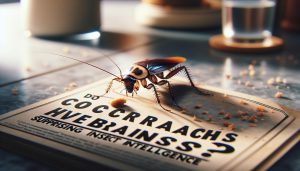
Did you know that cockroaches have been around for over 300 million years? Despite their reputation, these resilient creatures have fascinating mental capabilities that often surprise us. Exploring whether cockroaches possess a brain opens the door to understanding their remarkable adaptability and problem-solving skills. This inquiry may seem trivial, yet grasping the intricacies of their intelligence can shed light on broader topics of survival and evolution. Whether you’re dealing with a pest problem or simply intrigued by the natural world, uncovering five mind-blowing intelligence facts about cockroaches will deepen your appreciation for these tenacious survivors. Prepare to challenge your perceptions and discover how even the most unlikely creatures can exhibit extraordinary mental feats!
Do Cockroaches Have a Brain? Understanding Their Nervous System
Cockroaches, often seen as mere pests, possess an intricate nervous system that enables them to navigate their environments with surprising agility. Despite their small size, these creatures boast a decentralized form of nervous system, with a brain that plays a crucial role in processing sensory information and coordinating movement. Rather than being a singular processing center, their nervous system consists of a chain of ganglia-clusters of nerve cells-that operate throughout their body. This unique structure allows cockroaches to continue functioning even if their brain is removed. Such resilience highlights the complexity of their nervous system and raises interesting questions about their capabilities.
Understanding the cockroach’s brain is integral to appreciating how they interact with their surroundings. The brain is relatively simple, composed of about a million neurons, yet it performs functions that suggest a level of intelligence. It processes signals regarding the environment, from detecting food sources to sensing danger. This ability to respond to stimuli is not only crucial for survival but also showcases the sophistication of their sensory processing. For example, cockroaches can react almost instantly to threats, demonstrating an acute awareness of their surroundings despite their seemingly primitive neurological setup.
Moreover, research into the nervous system of cockroaches reveals insights into effective decision-making processes within their species. They exhibit behaviors that suggest a form of collective intelligence, especially when navigating through complex environments or when foraging for resources. The interactions between their brain and peripheral nervous system facilitate quick and coordinated responses, allowing cockroaches to escape predators and adapt to rapidly changing conditions. This adaptability is a vital aspect of their survival and reflects an evolutionary advantage that enhances their persistence in diverse habitats.
In summary, while cockroaches may not possess intelligence in the traditional sense, their nervous system equips them with extraordinary capabilities essential for survival, exemplifying how complexity can exist in even the simplest of organisms. Their unique form of intelligence challenges conventional notions and invites further exploration into the workings of their fascinating neurobiology.
The Surprising Intelligence of Cockroaches

Cockroaches are often dismissed as mere pests, yet they exhibit a surprising level of intelligence that invites a reevaluation of how we understand these resilient creatures. For instance, studies have shown that cockroaches can navigate complex mazes, demonstrating the ability to learn and adapt their behaviors based on their experiences. This suggests that their cognitive capabilities extend beyond instinctual responses, highlighting a form of intelligence that is both practical and sophisticated.
One of the remarkable aspects of cockroach intelligence lies in their decision-making processes. Research has revealed that when faced with obstacles or varying environmental conditions, cockroaches can quickly assess their surroundings and choose optimal paths to safety or food. This adaptability not only showcases their problem-solving skills but also offers insights for scientists on how survival instincts can manifest in behavior that resembles strategic planning. Furthermore, through collective behavior exhibited in groups, cockroaches can efficiently forage and communicate about food sources, demonstrating a type of social intelligence.
In stark contrast to their reputation as mindless scavengers, cockroaches provide valuable lessons in resilience and resourcefulness. For instance, they are capable of adapting their foraging strategies based on previous experiences, which suggests they possess a form of memory that aids in survival. This ability to learn from past encounters not only enhances their foraging efficiency but also underscores the evolutionary advantages they hold in diverse and often challenging environments.
Understanding the intelligence of cockroaches can serve as a fascinating reminder of the complexity of life forms that populate our planet. By studying how these insects solve problems and interact within their ecosystems, researchers can unlock new perspectives on neurobiology, adaptability, and even the foundations of intelligence itself. Embracing this awareness can inspire curiosity and a deeper appreciation for the seemingly unremarkable, pushing us to consider the hidden capabilities that exist in all living organisms.
How Cockroaches Make Decisions: An Insight into Behavior

The way cockroaches make decisions challenges our traditional notions of intelligence in the animal kingdom. These insects, often viewed merely as annoying pests, exhibit remarkable behavioral flexibility that allows them to adapt and thrive in various environments. When faced with a problem, such as navigating a maze or finding food, cockroaches utilize a combination of sensory data and past experiences to inform their choices. This is not purely instinctual; rather, it reflects a dynamic process of assessing their surroundings, weighing options, and determining the most advantageous path.
Research indicates that cockroaches are capable of employing a form of risk assessment when making decisions. For instance, they may take longer routes to avoid potential threats, demonstrating a calculated approach to safety. These insects can quickly shift their behavior in response to changes in their environment, such as varying light levels or obstacles in their path. This adaptability suggests a sophisticated level of decision-making that goes beyond simple responses to stimuli.
Moreover, cockroaches leverage social behaviors to enhance their decision-making. In a group, they communicate through chemical signals and physical interactions, allowing them to coordinate foraging efforts and navigate complex environments together. This collective intelligence not only increases their efficiency but also exemplifies how social dynamics can influence individual behavior.
Understanding the decision-making processes of cockroaches offers valuable insights into broader questions of intelligence and adaptability in the animal kingdom. By studying these behaviors, researchers can uncover the underlying mechanisms of cognition and develop new approaches to problems in neurobiology and ecology. The strategic and flexible nature of cockroach decision-making exemplifies nature’s ability to engineer intelligent solutions, reminding us that intelligence exists in many forms across diverse species.
Comparing Cockroach Intelligence to Other Insects
Cockroaches, often dismissed as mere pests, display a remarkable range of cognitive abilities that set them apart from other insects. For instance, while bees have long been celebrated for their navigation skills and complex social structures, cockroaches exhibit a unique kind of intelligence rooted in adaptability and survival strategies. Their decentralized nervous system allows them to process information in real time, making them extremely responsive to environmental changes-a trait that is less pronounced in many other insects.
Decision-Making Processes
The decision-making processes of cockroaches are particularly noteworthy when compared to other insects. For example, ants are known for their pheromone-based communication and organized foraging strategies, which rely heavily on group decisions. In contrast, cockroaches can make autonomous decisions based on sensory input. They are capable of assessing risks and sensitivity to danger, often choosing to take longer, safer routes rather than rushing headlong into potential threats. This flexibility in decision-making marks a significant distinction, as their intelligence is often more individualistic compared to the highly communal approach seen in ant colonies.
Learning and Memory
When considering learning capabilities, both cockroaches and fruit flies exhibit a form of associative learning, but cockroaches demonstrate a greater ability to adapt behaviors based on past experiences. Research has shown that cockroaches can develop a memory of safe and unsafe environments, changing their behavior as a result. This adaptability contrasts with the relatively rigid behavioral patterns of some other insects, such as certain beetles, which may not alter their actions significantly in response to prior experiences.
- Cockroach Intelligence: Exhibits flexibility in decision-making, capable of risk assessment.
- Ant Intelligence: Relies on collective decision-making through pheromone trails.
- Fruit Fly Intelligence: Shows associative learning, but limited in behavioral adaptability.
- Beetle Intelligence: Typically demonstrates more rigid behavioral patterns without significant learning adaptations.
This comparison highlights the varied spectrum of intelligence in the insect world, with cockroaches standing out for their ability to navigate complex environments both individually and socially. Their survival strategies and cognitive processes not only challenge our perceptions of their intelligence but also prompt intriguing questions about the evolution of cognitive traits in insects overall.
Can Cockroaches Learn? Exploring Memory and Learning Abilities
Cockroaches are more than just resilient pests; they possess fascinating memory and learning abilities that challenge traditional notions of insect intelligence. Research has shown that these creatures can engage in associative learning, allowing them to adapt their behaviors based on past experiences. For instance, if a cockroach encounters a dangerous environment, it can learn to associate that setting with danger and avoid it in the future. This capacity to retain and act on memories not only highlights their cognitive sophistication but also demonstrates their ability to navigate complex survival scenarios.
What sets cockroaches apart from many other insects is their remarkable flexibility in behavior. Unlike certain insects, which exhibit fixed behavioral patterns, cockroaches can modify their actions based on new information. This is evident in experiments where they learn to navigate mazes: cockroaches trained to avoid a specific location due to an unpleasant experience can alter their paths based on their memories, showcasing an impressive level of cognitive adaptation. Furthermore, they have been observed to remember the layout of their environment, guiding them in making decisions about where to find food and shelter.
- Associative Learning: Cockroaches can form associations between experiences and environmental factors, which help them adapt their behavior.
- Memory Retention: Research indicates cockroaches retain memories of safe and unsafe locations, influencing their future choices.
- Behavioral Flexibility: They exhibit adaptability in both individual and group contexts, consistently altering their actions based on learned information.
These cognitive capabilities not only contribute to their survival in challenging environments but also prompt further inquiry into the evolutionary pathways of intelligence among insects. Understanding how cockroaches learn and remember can provide valuable insights into the broader ecological dynamics of pest control, resource management, and resilience in the face of environmental challenges. As researchers continue to explore these questions, the humble cockroach reminds us that intelligence can manifest in many forms, often in unexpected places.
What Cockroaches Teach Us About Survival Intelligence
Cockroaches are not just tenacious survivors in the natural world; they embody a remarkable model of survival intelligence that can inform our own lives. Their ability to adapt and respond to their environment is driven by more than just instinct-it’s a complex interplay of cognitive functions that guide their behavior in ever-changing conditions. This resilience is rooted in several key mechanisms of survival intelligence that can illuminate our understanding of adaptability and ingenuity.
One of the most significant aspects of cockroach behavior is their proficiency in learning from experience. When faced with threats, cockroaches can modify their actions based on previous encounters, demonstrating a form of environmental awareness akin to problem-solving. For instance, in laboratory settings, cockroaches have exhibited the ability to navigate obstacles by recalling past experiences that inform their current decisions. This learning capability not only aids in finding food and shelter but also enhances their ability to evade predators.
Moreover, cockroaches excel at risk assessment, which is crucial for their survival. By weighing the potential benefits against the dangers of a situation, they can make informed choices about when to explore new territories or when to retreat. This adaptive strategy highlights the dynamic nature of their decision-making processes, as they can adjust their behavior based on fluctuating environmental cues.
Incorporating insights from cockroach survival strategies can inspire individuals striving for personal growth and resilience. By embracing a mindset of adaptability-learning from failures, recalibrating approaches, and making informed choices based on past experiences-people can enhance their own capabilities in life’s challenges. Whether navigating workplace dynamics or personal relationships, the lessons drawn from these insects underscore the importance of cognitive flexibility and continuous learning as engines of personal empowerment.
- Learning from Experience: Cockroaches utilize their past encounters to inform future decisions, which enhances their survival rates.
- Risk Assessment: Their ability to weigh potential risks and rewards allows them to navigate complex environments effectively.
- Adaptability: The capacity to adjust behaviors based on environmental changes can serve as a powerful lesson for personal resilience.
Ultimately, observing these resilient insects teaches us about the power of cognitive adaptability and decision-making, principles that can be pivotal in our own lives for coping with stress and uncertainty. Embracing the intelligence exemplified by cockroaches encourages a proactive approach to overcoming obstacles, making each challenge an opportunity for growth and learning.
The Role of the Cockroach Brain in Sensory Processing
Cockroaches possess an intricate nervous system that enables them to efficiently process a wide array of sensory inputs, helping them navigate their environments with remarkable agility. Their brains, while not as complex as those of more advanced species, demonstrate a high degree of specialization that supports their sensory capabilities. Cockroaches utilize sensory receptors for touch, taste, smell, and sound, which are all critical for survival.
The cockroach brain is divided into several parts, with distinct roles in processing different types of information. For instance, the antennal lobes, which are part of their brain, are highly developed and play a crucial role in olfactory processing-helping cockroaches detect food sources, pheromones, and potential threats. By processing these signals rapidly, they can respond to changes in their environment almost instantaneously, which is vital for their survival, especially when evading predators.
Moreover, research shows that cockroaches can interpret vibrations and air currents, thanks to specialized organs known as the cerci, located on their abdomen. These sensory inputs allow them to detect nearby movements, giving them an edge in identifying predators. This sophisticated sensory processing capacity highlights the adaptability of cockroaches, showcasing how their evolutionary design has fine-tuned their brain functions to enhance their chances of survival.
The efficiency of cockroach sensory processing can inspire us in our everyday lives, particularly when it comes to stress management and workplace wellness. Just as these insects utilize their sensory capabilities to navigate and respond to their surroundings, we too can benefit from being aware of our environments and the cues they provide. Developing mindfulness practices-like tuning into our senses or evaluating our workspace for factors that could enhance our performance-can lead to improved cognitive function and overall well-being.
- Utilization of Sensory Inputs: Cockroaches excel at integrating multiple sensory signals, which allows them to make rapid decisions and actions.
- Environmental Awareness: Their ability to interpret sensory data is a model for becoming more attuned to our surroundings and reacting appropriately.
- Mindfulness Lessons: Observing how cockroaches process sensory information can encourage us to enhance our awareness for better decision-making.
Implementing techniques such as sensory breaks or integrating environments that stimulate our senses can help us stay alert and responsive, much like the resilient cockroaches we study. Ultimately, understanding the role of their brain can provide valuable lessons in adaptability and cognitive fitness, urging us to optimize our own brain health and environmental interactions.
How Cockroaches Communicate: Signals and Social Behavior
Cockroaches, often seen as mere pests, exhibit a fascinating array of communication methods, showcasing a level of social behavior that can be surprisingly complex. They utilize a combination of chemical signals, tactile interactions, and auditory cues to convey information to others in their environment. This communication is vital not only for survival but also for establishing social hierarchies and coordinating group behaviors.
One of the primary ways cockroaches communicate is through pheromones, which are chemical substances released into the environment. These pheromones serve various purposes: they can signal distress to alert others of danger, mark paths to food sources, and help in attracting mates. When a cockroach finds food, it often leaves a trail of pheromones that guide others to the resource. This sense of collective foraging is akin to collaborative behaviors observed in other social insects, like ants and bees.
In addition to chemical signals, cockroaches engage in physical contact to share information. Through touching antennae or body parts, they can transfer crucial information about their surroundings, including danger or the presence of food. This tactile communication helps to strengthen social bonds within their colonies and is crucial during mating rituals.
Auditory communication also plays a role, although less emphasized. Cockroaches can produce sounds by rubbing their wings together, a behavior known as stridulation. These sounds might serve to attract mates or facilitate communication among individuals in close proximity, signaling the presence of potential danger or the need to regroup.
The intricacies of cockroach communication highlight their adaptability and social structures. By understanding these behaviors, we can gain insights into their survival strategies and resource management, which can be analogized to teamwork and collaboration in our own lives. Just as cockroaches coordinate their activities for survival, fostering open communication and teamwork in professional settings can enhance collective productivity and well-being.
Incorporating lessons from cockroach behavior into workplace practices can be highly beneficial. Here are some strategies to enhance communication within teams:
- Encourage Open Dialogue: Just as cockroaches signal information through pheromones, fostering an environment where team members feel free to share insights and concerns can lead to better problem-solving.
- Use Collaborative Tools: Implement tools that facilitate information sharing, mirroring how cockroaches guide one another to food sources. Tools like shared documents or messaging platforms can enhance teamwork.
- Recognize Non-Verbal Cues: Pay attention to body language and tone, similar to how cockroaches use tactile communication. Non-verbal signals can be as informative as spoken words.
By applying these principles, organizations can create a more connected and communicative atmosphere, ultimately leading to greater efficiency and a healthier work environment. Understanding the social dynamics of even the most unlikely creatures can inspire us to cultivate better communication practices in our own lives.
Debunking Myths: Cockroach Intelligence vs. Instinct
Cockroaches are often misunderstood as mindless pests, driven solely by instinct. However, research has begun to reshape our understanding of their intelligence and cognitive behaviors, revealing that these resilient insects possess a surprising capacity for learning and adaptation. While their reactions may appear instinctual at times, they also demonstrate complex decision-making skills, showcasing a blend of innate behaviors and learned responses.
A common myth surrounding cockroach behavior is that their actions are entirely instinctual. In reality, cockroaches can exhibit behaviors that suggest a level of learning and memory. For example, they can navigate mazes and remember the routes leading to food sources, indicating that they can learn from experience rather than solely relying on pre-programmed instincts. This adaptability is essential for their survival, especially in rapidly changing environments where successful foraging and avoiding threats are crucial for their existence.
Furthermore, studies have shown that cockroaches can modify their behaviors based on previous encounters with obstacles or predators. When faced with danger, they can remember safe routes and adjust their movements accordingly. This ability to learn from past experiences allows cockroaches to enhance their survival strategies, challenging the notion that they lack any form of intelligence.
The interplay between instinct and intelligence is not only fascinating from a biological perspective but can also draw parallels to workplace wellness and cognitive health. Just as cockroaches learn to navigate their environments and adapt to challenges, individuals can benefit from developing adaptive coping strategies in stressful situations. Here are some approaches to enhance personal adaptability in the workplace:
- Practice Mindfulness: Cultivating mindfulness can help you become aware of your stress responses and learn healthier ways to cope, similar to how cockroaches respond to danger.
- Reflect on Experiences: Take time to analyze past workplace challenges and identify strategies that worked-or didn’t work-so you can adapt your approach in the future.
- Embrace Continuous Learning: Just as cockroaches learn from their environment, seek opportunities for professional development to enhance your skills and adaptability in your career.
By understanding the nuanced behaviors of cockroaches, we can appreciate the spectrum of intelligence and how it manifests in life’s adaptive strategies. Embracing flexibility and ongoing learning paves the way for personal and professional growth, leveraging the innate abilities we all possess to navigate the complexities of our environments.
Real-Life Applications of Cockroach Behavior in Science
The remarkable ability of cockroaches to adapt and learn has far-reaching implications in various scientific fields, making them more than just common pests; they are living laboratories that offer insights into complex biological mechanisms. Researchers harness the cognitive capabilities of cockroaches to explore areas ranging from robotics to neuroscience, capitalizing on their exceptional survival strategies. For instance, studies of cockroach navigation and decision-making processes contribute to the development of bio-inspired robots that mimic their efficient locomotion and environmental awareness, paving the way for advancements in robotic automation.
Research on cockroach behavior also aids in understanding neural plasticity and sensory processing. Their nervous system, although simpler than that of mammals, exhibits fascinating learning behaviors that researchers study to uncover basic principles of cognition applicable to all living beings. Insights gained from observing how cockroaches respond to threats or navigate complex environments enhance our understanding of memory formation and behavioral adaptation. As cockroaches utilize environmental cues to make informed decisions, this has prompted further investigation into how these mechanisms could translate to improving human cognitive functions through stimulating certain neural pathways via biofeedback or environmental enrichment.
Additionally, the resilience of cockroaches in challenging situations provides valuable lessons in survival intelligence. Spread across a variety of scientific disciplines, including evolution and ecology, understanding the adaptive strategies of cockroaches sheds light on broader principles of resilience that can be applied to humans facing stressful environments. Acknowledging the strengths of these creatures can inspire actionable strategies for personal and professional growth. For example, by reflecting on and learning from our past experiences-much like cockroaches adjust their routes-we can enhance our adaptability in the workplace.
Harnessing the amazing capabilities of cockroaches not only enriches our scientific knowledge but also serves as a reminder of the importance of adaptability in our daily lives. As we draw from their resilience, we can implement practical changes to cultivate a work environment that embraces continuous learning and adaptation, encouraging ourselves to overcome challenges with a similar tenacity. Emphasizing these lessons can foster a culture of resilience and growth, ultimately benefiting both individuals and organizations.
The Evolution of Cockroaches: Intelligence Through Time
The study of cockroach evolution reveals a fascinating journey of adaptability and intelligence that has allowed these insects to thrive for millions of years. Emerging over 300 million years ago, long before the dinosaurs, cockroaches have continuously evolved to survive in various environments, demonstrating remarkable resilience and problem-solving abilities. This long lineage has equipped them with strategies that allow them to respond effectively to threats and changes in their surroundings, showcasing their survival intelligence.
Throughout their evolution, cockroaches have developed a highly efficient nervous system that, while simpler than that of mammals, allows for impressive sensory processing and rapid decision-making. Their brains are adept at processing information from their environment, enabling them to react swiftly to dangers and obstacles. For instance, when facing predators, cockroaches can employ a variety of evasive maneuvers, such as darting away in unpredictable directions. This behavioral trait demonstrates a level of intelligence that is often underestimated, helping them avoid extinction despite environmental changes.
Additionally, cockroaches exhibit learning abilities that evolve alongside their environments. Through experiences, they can adjust their behaviors, such as recognizing threats or finding food sources. This adaptability is crucial; it has allowed them to thrive in diverse settings, from tropical rainforests to urban spaces, where their survival strategies continue to evolve. The journey of cockroaches reflects a broader narrative of resilience and adaptability that is relevant not only to their species but also offers insights into overcoming challenges in life and work.
When seeking to enhance our adaptability in personal and professional realms, we can take cues from cockroach evolution. Embracing a mindset of continuous learning, much like how these insects adjust their behaviors based on environmental feedback, encourages resilience. By analyzing our surroundings, reflecting on past experiences, and being open to change, we can cultivate a growth-oriented mindset that empowers us to navigate challenges effectively. Just as cockroaches have thrived through evolutive intelligence, we too can adapt and flourish by harnessing our capacity for learning and resilience.
Cockroach Survival Strategies: Lessons in Adaptability
The ability to adapt is one of nature’s most remarkable traits, and cockroaches exemplify this principle in an extraordinary way. These resilient insects have survived for over 300 million years, showcasing an incredible knack for adjusting to their environments and overcoming myriad challenges. Whether navigating urban landscapes filled with obstacles or finding food in scarce conditions, their survival strategies reveal insightful lessons applicable to both personal growth and workplace adaptability.
First and foremost, cockroaches demonstrate a remarkable level of environmental awareness. They utilize a complex array of sensory inputs, from touch to smell, enabling them to perceive threats and opportunities quickly. In a workplace context, honing your sensory awareness can help you better navigate challenges. For example, being attuned to the dynamics of team interactions – recognizing non-verbal cues and shifts in mood – can equip you to respond proactively to conflicts or collaborative opportunities. Create a system that encourages open communication and team feedback, similar to how cockroaches thrive through their responsive behaviors.
Moreover, cockroaches exhibit flexible problem-solving capabilities. Research has shown that these insects can learn from their experiences and adapt their behaviors accordingly. This adaptability aligns closely with the concept of neuroplasticity in humans – our brain’s ability to reorganize itself based on experiences. To enhance your adaptability at work, embrace a growth mindset. Engage in continuous learning through professional development courses, workshops, or simply challenging your comfort zone with new projects. This proactive approach fosters resilience, enabling you to tackle unexpected changes with confidence.
Another inspiration from cockroach survival strategies is their efficient use of resources. In environments where food is scarce, they can limit their energy expenditure and shift their survival techniques to maximize efficiency. In the workplace, optimizing your resources-such as time and energy-can lead to increased productivity. Consider setting boundaries around your work hours and effectively managing your workload through prioritization and delegation. Implementing efficient workflows and time management techniques can help you concentrate your efforts where they matter most, thereby enhancing overall performance and job satisfaction.
In summary, while cockroaches may not be the most glamorous creatures, their persistent adaptability can inspire significant insights into resilience and efficiency in our own lives. By incorporating sensory awareness, embracing lifelong learning, and optimizing resource use, you can navigate workplace challenges with the same tenacity that has allowed these insects to thrive for millennia. By learning from their strategies, you can cultivate a mindset and skillset that not only equips you to handle stress but also empowers you to excel in an ever-changing environment.
Faq
Q: Do cockroaches have a central nervous system?
A: Yes, cockroaches possess a central nervous system, which includes a brain and a ventral nerve cord. This system allows them to process sensory information and coordinate their movements effectively, demonstrating a level of complexity in their behavior and responses.
Q: How do cockroaches exhibit problem-solving skills?
A: Cockroaches display problem-solving abilities by navigating complex environments and adapting their behaviors to find food or escape threats. For example, when facing obstacles, they can change their path to reach their goal, showcasing their cognitive flexibility.
Q: Can cockroaches feel pain?
A: Cockroaches do not experience pain in the same way mammals do, as they lack the brain structure associated with pain perception. However, they do respond to harmful stimuli, indicating a basic form of nociception that helps them survive in their environments.
Q: How intelligent are cockroaches compared to other insects?
A: Cockroaches exhibit advanced learning and adaptability compared to many other insects. Studies show they can learn from experience and exhibit behaviors like social interactions and memory retention, which some other insect species may not demonstrate as strongly.
Q: What can we learn from cockroach behavior?
A: Cockroach behavior teaches us valuable lessons about adaptability and survival. Their ability to thrive in diverse environments despite significant challenges provides insights into resilience and problem-solving strategies that can inspire applications in robotics and design.
Q: How do cockroaches communicate with each other?
A: Cockroaches communicate primarily through pheromones, which are chemical signals that convey information about food sources and threats. They also use tactile signals, such as touching each other with their antennae, to establish social connections and coordination within their groups.
Q: What role does the cockroach brain play in sensory processing?
A: The cockroach brain plays a crucial role in processing sensory inputs from their environment, such as smell and touch. It integrates this information to help the cockroach respond appropriately, which is vital for survival and navigating complex habitats.
Q: Are cockroaches capable of memory recall?
A: Yes, cockroaches can retain memories and recall them, particularly concerning their environment and learned tasks. This recall ability aids them in navigating their surroundings and avoiding danger, enhancing their survival prospects.
The Way Forward
Now that you’ve discovered the surprising intelligence of cockroaches and their unique adaptations, why not delve deeper into the fascinating world of insects? Explore our article on “The Secret Lives of Ants” to uncover more about the intricate behaviors of these social creatures. If you found this information eye-opening, consider subscribing to our newsletter for more engaging content that combines science and everyday life.
Feeling concerned about unwelcome pests in your home? Check out our comprehensive guide on the best pest control strategies to keep your space bug-free. Remember, knowledge is power-understanding these creatures can lead to more effective prevention.
Don’t miss out on the latest insights! Share your thoughts in the comments below, and if you enjoyed this piece, hit the share button to help others learn about the brainy world of cockroaches. Your curiosity has only just begun-explore further for a world of knowledge waiting for you!