
Did you know that cockroaches can survive without their heads for weeks? These incredible insects possess a complex nervous system that challenges our traditional understanding of brain function. In “Does Cockroach Have a Brain? Amazing Survival Secrets Revealed,” we delve into the fascinating world of cockroach survival mechanisms and their unique adaptability. Understanding these resilience strategies can inspire us, highlighting the ingenuity of nature and the importance of cognitive function in all living beings. Join us as we explore the remarkable biology of cockroaches, uncovering how these creatures navigate, react, and thrive against odds that would challenge even the most advanced systems. This exploration not only satisfies curiosity but also provides valuable insights into the world of survival intelligence, reinforcing the importance of adaptability in our own lives.
Does a Cockroach Really Have a Brain?
Cockroaches, often considered pests, are fascinating creatures with complex biological systems. At the heart of their operations is a surprisingly sophisticated network: yes, cockroaches indeed possess a brain. While their brains may not look like ours-small, about the size of a grain of rice-they play a crucial role in managing both their everyday functions and extraordinary survival skills. The cockroach brain, along with its decentralized nervous system consisting of multiple nerve ganglia throughout its body, enables quick responses to stimuli, which is vital for evading predators.
The structure of a cockroach’s brain is divided into several regions, each responsible for specific functions such as sensory perception and motor control. This division allows them to process information rapidly and react in real-time, giving them the reputation of being quick thinkers in their own right. For example, the brain helps them coordinate complex behaviors like searching for food, navigating through environments, and even social interactions with other cockroaches.
Interestingly, the principles behind their brain’s functionality can provide insights into broader biological and neurological themes. Studying how cockroaches process information and react can inspire new strategies in robotic design and artificial intelligence, paving the way for advancements in technology that mimic these resilient insects. Understanding their brain can also guide pest control methods, leveraging natural behavior patterns for more effective management solutions. As we delve into the remarkable abilities of cockroaches, it becomes clear that their brain, while simple, is a key component of the survival secrets that make them enduringly successful on our planet.
The Anatomy of a Cockroach’s Brain
The cockroach’s brain, though small-about the size of a grain of rice-plays a crucial role in the insect’s remarkable adaptability and survival. It is organized into several distinct regions, each specializing in different functions such as sensory perception, motor control, and decision-making. This compartmentalization allows the cockroach to process information swiftly and respond to environmental cues in real-time. For instance, when faced with a threat, the speed at which it can react is integral to its ability to evade predators, showcasing the brain’s role in coordinating complex behaviors.
The structure of the cockroach’s brain enables it to execute impressive maneuvers, from navigating intricate environments to engaging in social interactions with other cockroaches. Its sensory receptors can detect light, sound, and even chemical signals, enhancing its ability to locate food and navigate toward safety. The effectiveness of its neural network is a product of millions of years of evolution, fine-tuning these systems for optimal performance under various conditions.
Furthermore, the decentralized nervous system, featuring a network of nerve ganglia that runs throughout its body, complements the cockroach’s brain. This arrangement allows for rapid, localized movements independent of the brain’s direct control, enabling quick reflex actions. For example, a cockroach can flee from danger almost instantaneously while the brain processes information about the threat. This combination of brain and nervous system anatomy is a key factor in the cockroach’s reputation for resilience and longevity, traits that have captivated scientists and inspired advancements in fields like robotics and artificial intelligence. Understanding the intricacies of the cockroach’s neural architecture provides deeper insights into survival strategies that could be translated into real-world applications, enhancing our approach to technology and pest control alike.
Survival Strategies: How Cockroaches Adapt
Through millions of years of evolution, cockroaches have developed remarkable survival strategies that enable them to thrive in diverse and often challenging environments. Their adaptability is not merely a result of physical traits; it is deeply rooted in their unique neurological architecture, which allows for efficient processing of environmental cues and quick reactions to threats. For instance, studies indicate that cockroaches can sense changes in their surroundings, including movements and chemical signals, which helps them navigate and evade predators effectively.
One of the most striking features of cockroach behavior is their ability to modify their habits based on experience. They can learn from their interactions with the environment and exhibit changes in behavior that enhance their chances of survival. For example, when exposed to a certain type of stimulus, such as a specific sound or vibration, cockroaches can alter their hiding places or feeding strategies. This adaptability underscores the notion that their responses are not purely instinctive; instead, they involve a degree of learning and memory that is critical for long-term survival.
Moreover, the decentralized nervous system of the cockroach plays a crucial role in their survival tactics. Their body operates through a network of nerve ganglia that allows them to execute rapid movements without waiting for signals from the brain. This means that even if part of their body is injured, they can still respond reflexively to danger. Such resilience not only prolongs their survival in the wild but also demonstrates an effective evolutionary strategy that minimizes the potential impact of predation.
Incorporating various survival strategies – from learning and memory capabilities to rapid reflexes – defines the cockroach as a fascinating study in resilience. By understanding these mechanisms, we gain insight into broader themes of survival and adaptability in nature, which can also inspire approaches in areas like robotics and pest management. The lessons learned from the humble cockroach exemplify the intricate relationship between anatomy, behavior, and environmental interaction, revealing deeper connections that can drive innovations in multiple fields.
Cockroach Nervous System: More Than You Think
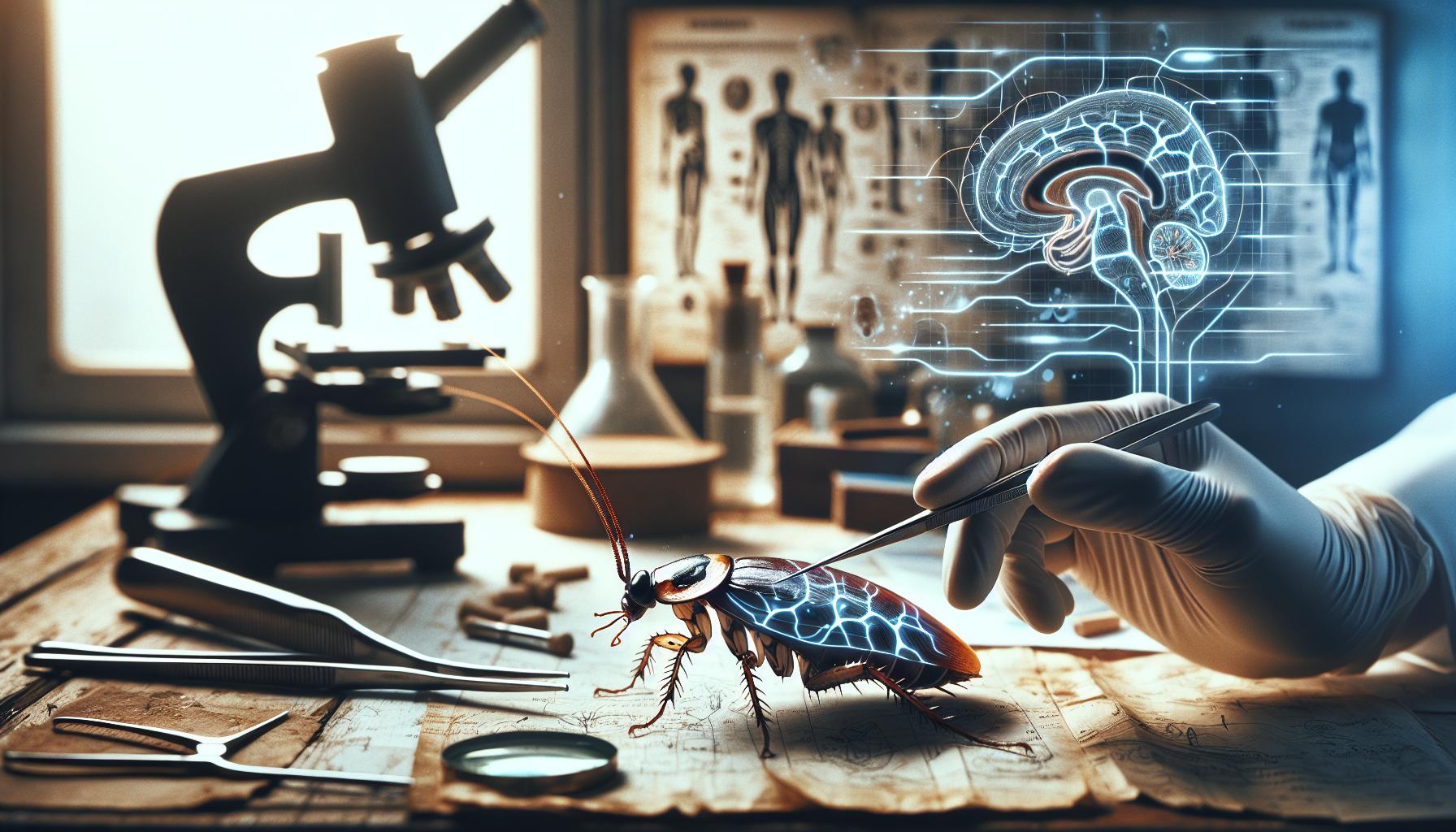
The intricate design of a cockroach’s nervous system reveals its remarkable ability to survive in varying environments, often thought to be hostile. Cockroaches possess a decentralized nervous system, unlike mammals, where the brain centrally processes information. Instead, cockroaches have a series of nerve centers (ganglia) distributed throughout their bodies, functioning almost independently while remaining connected to the brain. This structure allows for rapid reflexes-crucial for escaping predators-enabling cockroaches to react within milliseconds.
Their nervous system is highly adept at processing stimuli from their environment. For instance, cockroaches can detect vibrations, changes in light, and various chemicals in the air, demonstrating an advanced sensory ability. This real-time data transmission ensures that they can quickly change their behavior in response to potential threats. The speed at which this happens showcases not only their survival instincts but also the extraordinary efficiency of their biological design.
Additionally, these insects demonstrate a level of sophistication in their mobility. The signals to their legs are processed locally by ganglia, allowing them to move swiftly even if their head is removed. This capability underscores their resilience, as they can operate almost autonomously despite injury.
Understanding the complexities of the cockroach nervous system highlights the intricate relationship between structure and survival. Such insights extend beyond simple pest control methods, inspiring innovations in robotics and artificial intelligence, where similarly decentralized systems could enhance responsiveness and adaptability in machinery. Thus, studying these seemingly simple creatures opens doors to understanding complex systems, both biological and artificial, showcasing their unique place in the study of resilience and adaptation in nature.
The Secrets Behind Cockroaches’ Incredible Resilience
Cockroaches have fascinated scientists and laypeople alike for their astounding survival capabilities, which can make them seem almost indestructible. One secret to their resilience lies in their unique biological traits that allow them to thrive in conditions that would be detrimental to many other species. With a decentralized nervous system and an exceptional ability to adapt, these insects exemplify survival in even the harshest environments.
Decentralized Nervous System
Unlike mammals, cockroaches possess a decentralized nervous system composed of multiple nerve centers or ganglia that are distributed throughout their bodies. This configuration allows them to process sensory information and execute movements rapidly and independently. For example, if a cockroach loses its head, it can still survive for weeks, moving and responding to stimuli. The local processing of signals means that it can react to dangers, like a predator, almost instantaneously, showcasing an evolutionary advantage.
Rapid Adaptation and Resilience
Cockroaches are legendary for their ability to adapt quickly to different environments. They can thrive in both urban and rural settings, demonstrating remarkable versatility. This adaptability extends to their diet; cockroaches can consume a wide variety of organic and inorganic materials, which makes them less reliant on specific food sources. This dietary flexibility is a key factor in their survival, allowing them to persist even in food-scarce situations.
Moreover, their ability to withstand extreme conditions is impressive. Cockroaches can survive without food for a month and endure extreme temperatures, making them incredibly difficult to eliminate. This resilience inspires engineers and scientists, influencing the design of robots that can navigate complex environments and adapt to changing conditions, much like the cockroach itself.
In essence, serve as important lessons in adaptability and survival. Their unique biological traits, combined with their rapid response capabilities, illustrate how evolution has equipped them to maintain a foothold in diverse and challenging environments. Understanding these mechanisms not only helps in pest control but also inspires innovations in various fields, encouraging us to embrace resilience in our own lives.
What Cockroaches Can Teach Us About Survival
Cockroaches, often vilified as pests, embody resilience and adaptability in nature. Their remarkable ability to survive in varied environments teaches us important lessons about coping with challenges, both in life and the workplace. For instance, their decentralized nervous system allows them to function and react even when parts of their body are lost, symbolizing the importance of flexibility and resourcefulness in overcoming adversity. Such traits can inspire individuals to embrace change and adversity rather than shy away from them.
The dietary versatility of cockroaches serves as a reminder of the benefits of adaptability in our personal and professional lives. By being open to new ideas, experiences, and ways of doing things, we can navigate through life’s uncertainties more effectively. In a work environment, this translates to being willing to learn new skills or adapt to changes in our roles or tasks. Encouraging a culture of adaptability can foster innovation and resilience within teams, creating a more dynamic workplace.
Moreover, the cockroach’s ability to survive extreme conditions prompts us to reconsider our approaches to stress and pressure. Just as these insects can withstand prolonged periods without food or thrive in harsh temperatures, individuals can build their own resilience through effective stress management techniques. Techniques such as mindfulness, physical exercise, and cognitive flexibility can help enhance mental fortitude. Embracing such practices not only aids in tackling immediate challenges but also fortifies our overall well-being.
Ultimately, the survival strategies of cockroaches remind us of the significance of resilience, adaptability, and effective stress management. These are essential ingredients for succeeding in both personal and professional arenas. By learning from their unique biological traits, we can cultivate a mindset that embraces challenges and fosters growth, leading to a more fulfilling and balanced life.
Why Cockroaches Thrive in Extreme Conditions
Cockroaches are remarkably adept at thriving in a wide range of extreme conditions, a testament to their evolutionary resilience. These hardy insects can withstand temperatures as low as 32°F (0°C) and as high as 120°F (49°C) and can survive without food for over a month, making them infamous for their ability to endure hardships that would be fatal to many other animals. Their versatility and strength are keys to their longstanding presence on Earth, and understanding these traits can offer insightful lessons about survival and adaptability in our own lives.
One of the primary reasons cockroaches can thrive in harsh environments is their physiology. They possess a unique exoskeleton that provides protection and minimizes water loss, which is critical for survival in hot, dry conditions. Additionally, their decentralized nervous system allows them to continue functioning even when they lose limbs. This adaptability reflects an important strategy in resilience: the ability to find alternative ways to react and survive when faced with challenges. Just as cockroaches can reshape their behaviors to navigate through obstacles, individuals can learn to adopt flexible approaches in their own lives, whether in personal or professional settings.
Moreover, cockroaches demonstrate resourcefulness in their feeding habits. They are omnivorous scavengers, eating anything from decaying plant material to other insects, which allows them to thrive in varied environments, especially where traditional food sources may be scarce. This adaptability underscores the importance of maintaining a flexible mindset and being open to new experiences. In a workplace context, this can translate to the willingness to learn new skills, embrace changes in roles, and continuously seek innovative solutions to problems. Such adaptability not only fosters personal growth but also cultivates a resilient organizational culture.
In the pursuit of understanding and improving our resilience, it is beneficial to adopt practices that mimic cockroach survival strategies. This can include effective stress management techniques such as:
- Mindfulness Meditation: Cultivating awareness and presence can help manage stress.
- Physical Fitness: Regular exercise enhances both mental and physical resilience.
- Healthy Eating: A balanced diet mirrors the nutritional flexibility seen in cockroaches.
By examining these survival techniques and embracing a mindset similar to that of cockroaches, individuals can bolster their capacity to thrive even in adverse conditions, ultimately leading to greater workplace wellness and personal fulfillment.
The Role of Instinct vs. Intelligence in Cockroach Behavior
Cockroaches might not be considered intelligent in the way humans are, but their behavior reveals a fascinating interplay between instinct and learned responses. These insects rely heavily on instinctual actions, which are hardwired into their biology. For instance, their acute sensory perception allows them to rapidly detect threats, triggering immediate flight responses. This survival mechanism showcases how instinct serves as a primary tool in their daily lives, allowing them to react swiftly to dangers without the need for complex processing. However, recent research suggests that cockroaches are capable of more than just instinctual behavior; they can also learn from their experiences, albeit in a more simplistic way than higher organisms.
For example, studies have demonstrated that cockroaches can be trained to associate certain stimuli with rewards. When exposed to specific scents that lead to food, they can eventually learn to move towards those scents even in the absence of a reward. This ability indicates a degree of memory and learning that challenges the notion that they operate solely on instinct. It highlights how, while their primary responses are instinctual, they possess a basic form of intelligence that allows them to adapt their behavior based on past experiences.
Understanding the balance between instinct and intelligence in cockroach behavior offers valuable insights into resilience and adaptability-qualities that are equally important in human contexts. Embracing a mindset that prioritizes learning from experiences, much like cockroaches do, can significantly enhance personal and professional growth. Whether it’s navigating workplace challenges or adapting to new roles, recognizing the need for both instinctual reactions and learned behaviors can foster a more agile and resourceful approach to problem-solving.
To foster this adaptability in your own life, consider implementing the following practices:
- Reflective Journaling: Take time to write about past experiences and what you learned from them. This can help reinforce lessons for future situations.
- Continuous Learning: Engage in regular training or skill development to nurture your ability to adjust to changes.
- Cognitive Flexibility Exercises: Practice tasks that challenge your brain, such as puzzles or learning a new language, to enhance your ability to adapt and problem-solve.
By blending instinctual reactions with learned experiences, you can enhance your resilience and adaptability, leading to greater success in both your personal and professional life.
Can Cockroaches Learn and Remember?
While often misunderstood, cockroaches demonstrate a remarkable capacity for learning and memory, which extends far beyond mere instinctual behavior. Research has shown that these resilient insects can associate certain stimuli with outcomes, effectively learning from their environments in ways that support their survival. For instance, when exposed to specific scents that are linked to food sources, cockroaches can remember those scents and actively seek them out later, even when food is not immediately present. This ability underscores their adaptability and innate survival strategies.
Cockroaches utilize a simplified form of memory to navigate their surroundings, relying on the neural architecture of their brains. Although their brain structure is fundamentally different from that of mammals, they exhibit a capacity for associative learning. This means they can make connections between different sensory inputs and outcomes, a skill that not only enhances their foraging efficiency but also helps them avoid dangers based on past experiences. This characteristic provides an essential survival advantage, as it allows them to adjust their behaviors in response to environmental changes.
Understanding how cockroaches learn and remember can illuminate broader principles of adaptability that are relevant to our lives. For instance, in the workplace, cultivating a mindset that embraces learning from experiences-both positive and negative-can significantly enhance performance. Just as cockroaches thrive by recalling and reacting to their past, individuals can benefit from reflecting on their experiences to inform future decisions. Consider implementing reflective practices such as keeping a journal or participating in feedback sessions to deepen learning and improve adaptability in professional contexts.
Incorporating insights from cockroach behavior can also inspire more effective strategies for personal growth. Encourage continuous learning through workshops, training sessions, or online courses that challenge existing knowledge and stimulate cognitive flexibility. By fostering an environment that promotes learning-mirroring the adaptive strategies of cockroaches-individuals can enhance their ability to navigate challenges, improve problem-solving skills, and thrive in the ever-evolving landscape of work and life.
How Fast Can a Cockroach Escape?
Cockroaches are fascinating creatures, known for their incredible speed and agility when it comes to escaping threats. These insects can sprint up to 3 miles per hour on flat surfaces, which translates to roughly 50 body lengths per second. This remarkable speed allows them to evade predators and potential dangers swiftly. By understanding the mechanisms that enable this rapid escape, we can gain insights into how their biology is finely tuned for survival.
When a cockroach senses an imminent threat, the response is immediate. Their nervous system, while different from mammals, processes information quickly, enabling them to react in about 1/20th of a second. This rapid response is due to their unique neurological pathways, which facilitate immediate reflexes without extensive brain processing. Such efficiency is vital, especially in environments where threats can arise at any moment.
In addition to their speed, cockroaches are equipped with highly sensitive antennae that detect changes in their surroundings, further enhancing their ability to escape. These sensory organs provide real-time feedback, allowing cockroaches to navigate efficiently and avoid obstacles, making them adept at maneuvers and quick turns that are crucial during flight from danger. This quick-thinking capability demonstrates the intricate relationship between their sensory input and neural responses, offering valuable lessons in adaptability that can be mirrored in our professional lives. By fostering a mindset of quick adaptation and learning from our environment, we can improve our own response times to challenges, just as these insects do instinctively.
Understanding how cockroaches escape and navigate their environments can inspire us to enhance our own agility in the workplace. For instance, developing strategies that promote quick decision-making and adaptability can lead to improved efficiency and resilience. Embracing a proactive approach to challenges ensures that we, too, are equipped to “escape” from the hurdles we encounter in our daily lives.
Exploring the Myths: Cockroaches and Smartness
The perception of cockroaches as unintelligent creatures is a misconception that often overshadows their surprising capabilities. While these insects may not possess a brain in the way mammals do, with a centralized organ managing complex thought processes, they have a highly specialized nervous system that allows them to perform impressive feats of survival. In fact, research shows that cockroaches exhibit a range of behaviors that suggest a level of sophistication often underestimated.
Instinct and Learning
Cockroaches rely heavily on instinctive behaviors, but recent studies indicate they can learn from experience. These insects have shown the ability to associate a specific environment with a potential threat, demonstrating a form of memory that would contribute to their survival. For instance, if a cockroach is exposed to a harmful substance in a particular area, it learns to avoid that area in the future. This adaptability illustrates a basic form of intelligence, reflecting a survival strategy that is crucial in their often perilous environments.
Problem-Solving Abilities
Another myth is that cockroaches lack problem-solving skills. Observations in controlled settings have revealed their ability to navigate mazes, seek food, and find escape routes effectively. These behaviors suggest that cockroaches do possess a level of cognitive ability that allows them to interact with their surroundings thoughtfully. The speed and efficiency they demonstrate when navigating complex obstacles can serve as a reminder of the importance of honing our own problem-solving skills in the workplace. Just as cockroaches adapt, we too can become more effective by enhancing our ability to think critically and creatively when faced with challenges.
The Role of Biohacking
Understanding how cockroaches thrive in diverse conditions can offer insights into human resilience and adaptability. By adopting principles from these insects, such as quick decision-making and effective environmental navigation, we can foster our own cognitive agility. Biohacking practices, such as optimizing our work environments and employing proven stress management techniques, can mirror the adaptive strategies cockroaches use in their daily lives. This approach emphasizes the importance of creating a workspace that supports cognitive health-consider using standing desks or ergonomic furniture to promote physical comfort and mental clarity.
Ultimately, the narrative around cockroaches and intelligence serves to highlight our perceptions of adaptability and survival. By recognizing the complex systems at play in these insects, we can also reflect on our strategies for fostering workplace wellness and cognitive growth, ensuring we remain resilient in the face of adversity.
How Cockroach Biology Influences Pest Control Methods
Cockroaches are often viewed as mere pests, but their unique biology plays a significant role in shaping effective pest control methods. Understanding the anatomy and behavior of these resilient insects can provide insight into crafting strategies that not only eliminate them but also prevent their return. A remarkable aspect of cockroach biology is their fast reproductive cycle-they can produce up to 400 offspring a year, making eradication efforts even more challenging. This rapid population growth highlights the need for proactive pest management approaches.
One critical feature of cockroaches is their nervous system, which operates efficiently even in the absence of a centralized brain like mammals have. Their decentralized nervous system allows them to react quickly to threats, using reflexes rather than conscious thought. This capability means that traditional chemical sprays may not be as effective as expected, as cockroaches can often escape or evade the toxins before they succumb. Effective pest control, therefore, relies on comprehensive strategies that encompass both immediate elimination and long-term prevention.
To improve results, consider a multi-faceted approach:
- Integrated Pest Management (IPM): This combines various tactics such as sanitation, habitat modification, and monitoring to reduce cockroach populations sustainably.
- Using Baits and Traps: Unlike sprays, which may only incapacitate some roaches, baits can attract and poison multiple individuals, significantly impacting the population.
- Sealing Entry Points: Since cockroaches are adept at squeezing through tiny openings, ensuring that cracks and crevices in your home are sealed can help prevent infestation.
- Regular Cleaning: Maintaining a clean environment discourages cockroaches, as they are scavengers drawn to food residues and clutter.
By leveraging knowledge of cockroach biology, pest control strategies can be both more targeted and efficient. For instance, knowing where cockroaches thrive helps in placing traps and baits more effectively. This proactive understanding facilitates a harmonious living environment while enhancing overall wellness by reducing the anxiety associated with pest infestations. Embracing a thoughtful, science-backed approach not only improves pest control efficacy but also empowers individuals to take charge of their living spaces.
Q&A
Q: Do cockroaches feel pain?
A: Yes, cockroaches can feel pain. They possess a complex nervous system that allows them to respond to stimuli, such as harmful conditions. This ability enables cockroaches to escape threats, demonstrating their resilience and adaptability in various environments.
Q: How many brains do cockroaches have?
A: Cockroaches have one central brain, but they also possess a decentralized nervous system comprising multiple ganglia located throughout their body. This allows them to perform essential functions even if their brain is injured, highlighting their incredible survival abilities.
Q: Why are cockroaches so hard to kill?
A: Cockroaches are difficult to kill due to their rapid reproduction, ability to withstand radiation, and exposure to various environmental conditions. Their resilience is partly attributed to their adaptable physiology and the ability to alter their behaviors to escape threats.
Q: Can cockroaches survive without their heads?
A: Yes, cockroaches can survive for several weeks without their heads. This is because they breathe through tiny holes in their bodies and can rely on stored fat and nutrients. Their decentralized nervous system allows for basic functioning despite the loss of their head.
Q: What senses do cockroaches have?
A: Cockroaches have several senses, including taste, smell, and touch. They possess sensitive antennae that detect chemical signals in their environment, and their compound eyes allow them to see a wide range of movement, which aids in navigation and avoiding predators.
Q: How fast can a cockroach run?
A: Cockroaches can run at speeds up to 3 miles per hour, which is roughly 50 body lengths per second. This incredible speed, coupled with their ability to navigate quickly through various terrains, helps them evade danger swiftly.
Q: Do cockroaches have social structures?
A: While cockroaches are primarily solitary, some species exhibit social behaviors such as group foraging and shelter sharing. These interactions can improve survival rates by providing better access to resources and reducing predation risks.
Q: What is the lifespan of a cockroach?
A: The lifespan of a cockroach varies by species; however, on average, a cockroach lives for about 3 to 6 months. Various factors, including environment, food availability, and predation, can influence their longevity.
Feel free to explore more about cockroach biology and behavior in our article, “Does a Cockroach Really Have a Brain?” for additional insights.
Wrapping Up
As we uncover the fascinating world of cockroaches, it’s clear that their survival secrets reveal remarkable insights into resilience and adaptability. Now that you’ve discovered the intriguing details about whether a cockroach has a brain and how it survives against all odds, consider diving deeper into related topics. Explore our articles on cognitive performance and neuroplasticity for ways to enhance your own brain health, or check out our tips on creating ergonomic workplaces to foster better productivity.
Don’t miss out on further learning-subscribe to our newsletter for the latest on brain health and effective stress management techniques tailored for thriving in any environment. If you have questions or want to share your thoughts, drop a comment below! Your engagement helps us create more valuable content. Embrace the knowledge and start applying these insights today!