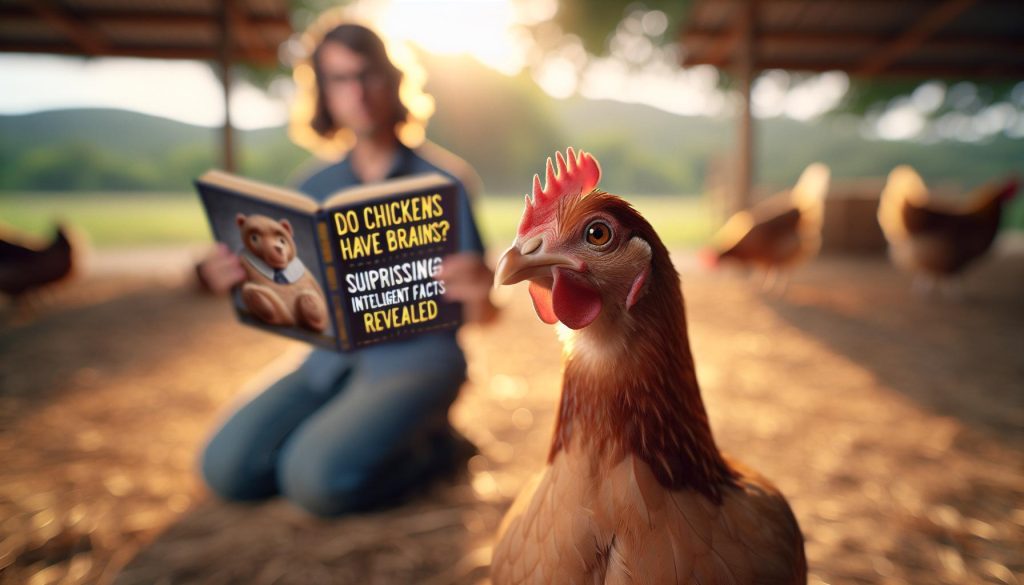
Did you know that chickens may be more intelligent than you think? These fascinating birds possess cognitive abilities that challenge traditional perceptions of avian intelligence. Understanding whether chickens have brains-and how they function-can enrich your appreciation for these animals, whether you’re raising them for eggs, meat, or companionship. As we explore the surprising intelligence facts about chickens, you’ll discover how their brain capabilities impact their behavior, social structures, and even their communication skills. This journey into the realm of chicken cognition will not only inform you about their unique traits but also encourage a deeper connection with these remarkable creatures. Keep reading to uncover the extraordinary world of chicken intelligence and what it means for their well-being and your responsibilities as a caretaker.
Do Chickens Really Have Brains? Understanding Their Anatomy
While often underestimated, chickens are indeed equipped with brains that play a crucial role in their daily lives. These organs, though smaller than those of many mammals, are complex and sophisticated, enabling a range of cognitive functions. Chickens possess a brain structure that supports learning, memory, and social interactions, revealing much about their intelligence and adaptability. Understanding the anatomy of a chicken’s brain helps illuminate why these birds can perform tasks that may surprise those who view them as simple farm animals.
The chicken brain consists of various regions that are responsible for different functions. For instance, the forebrain processes information related to smell and vision, while the brainstem controls vital functions such as respiration and heart rate. This anatomical setup supports a variety of behaviors, from foraging for food to social hierarchies within flocks. Furthermore, the neostriatum, a part of the chicken’s brain, is involved in decision-making and problem-solving, providing evidence of their ability to learn from interactions with their environment.
In addition to their physical anatomy, cognitive research highlights that chickens exhibit behaviors typically associated with more intelligent animals. Their ability to use spatial navigation to locate food, remember individuals, and even display emotions speaks volumes about their brain’s capabilities. Such insights challenge the traditional perceptions of chicken intelligence, underscoring the importance of recognizing the underlying anatomical and functional complexities that facilitate these behaviors. Understanding how chickens think and behave can lead to improved care practices, ensuring these creatures thrive in both domestic and wild settings.
Discovering Chicken Intelligence: What the Research Shows
Chickens have surprised researchers with their cognitive abilities, challenging long-held assumptions about avian intelligence. Recent studies reveal that chickens are much more than simple creatures; they possess skills comparable to some mammals, including problem-solving and social interaction. Research indicates that chickens can understand their surroundings, respond to social cues, and exhibit complex behaviors that suggest a significant level of intelligence.
For example, experiments have shown that chickens can use spatial awareness to navigate their environment effectively. They demonstrate an impressive capability to remember the locations of food sources and can even recognize individual members of their flock, a trait that highlights their social intelligence. This ability to form relationships and maintain a social hierarchy is critical for their survival, as it allows them to communicate distress or alerts about potential dangers to their peers.
Moreover, cognitive scientists have discovered that chickens engage in what appears to be advanced reasoning. They can anticipate outcomes based on their past experiences, suggesting a form of forward-thinking. This is evident when they exhibit behaviors that mimic planning, such as caching food for later retrieval, underscoring their ability to think ahead and strategize.
Ultimately, ongoing research into chicken intelligence continues to unveil their surprising mental capacities. As awareness grows about the cognitive abilities of these birds, it becomes increasingly important for poultry caretakers to foster environments that stimulate their minds, enhancing their well-being and promoting healthier social interactions within flocks. Understanding and recognizing these behaviors not only contribute to better care practices but also enrich our appreciation of the world of avian intelligence.
Cognitive Abilities of Chickens: Surprising Skills Uncovered
Chickens exhibit cognitive abilities that may surprise many, demonstrating that their intelligence is far more complex than traditionally believed. Recent research has unveiled a range of skills that suggest chickens possess a surprising level of mental acuity, rivaling certain mammals. For instance, studies have shown that chickens can engage in spatial navigation, which allows them to effectively map their surroundings. This spatial awareness is critical for locating food and evading potential predators. Moreover, they exhibit social intelligence by recognizing individual flock members and remembering their social status within the group, an essential trait for maintaining harmony and order.
One fascinating aspect of chicken cognition is their capability for advanced reasoning and planning. Chickens can anticipate outcomes based on previous experiences, which indicates a level of foresight. This is most evident when they cache food items, demonstrating their ability to think ahead and strategize for future needs. Such behaviors not only highlight their problem-solving skills but also illustrate their adaptability and survival instincts in both domestic and wild environments.
Furthermore, the impact of a stimulating environment cannot be understated as it directly influences a chicken’s cognitive development. Enriching settings, filled with various textures, social interactions, and challenges, allow chickens to thrive mentally. Caretakers should consider incorporating diverse activities into their management practices to enhance chicken welfare and intelligence. Recognizing these remarkable cognitive skills fosters a deeper appreciation for chickens, encouraging practices that support their well-being and enrich their lives, ultimately leading to healthier and happier flocks.
Social Behavior in Chickens: How They Communicate
Chickens are much more than the simple farm animals many people imagine; they possess an intricate system for communication that showcases their social intelligence. Remarkably, chickens communicate through a range of vocalizations, each serving a different purpose and conveying specific messages to their flock. Research indicates that chickens can produce over 30 distinct vocal sounds, which can indicate everything from alarm to relaxation. This rich tapestry of communication allows them to maintain social bonds and coordinate behaviors within their groups.
To understand how chickens express themselves, it’s helpful to explore some of their most common vocalizations. For instance, a short, sharp cluck typically signals a warning of danger, while a series of softer clucks can indicate contentment as they forage. Additionally, chickens are known to hiss or squawk loudly when defending their territory or while in distress. Recognizing these sounds can deepen a caretaker’s connection with their flock, enhancing management practices and improving overall flock welfare.
Social interaction among chickens extends beyond vocalizations; their body language plays a crucial role in communication as well. The positioning of their heads, their feather displays, and even their movements can convey confidence, submission, or stress. For example, puffing up their feathers can assert dominance, while a lowered head usually signifies submission. Caretakers can benefit from observing these behaviors, as they offer insights into the dynamics of the flock and individual chickens’ emotional states.
Fostering a harmonious social environment is essential for chicken well-being. Providing a spacious, enriched habitat can promote healthy interactions and reduce stress among flock members. Integration strategies, such as introducing new birds slowly and closely monitoring their interactions, can help maintain a peaceful and cooperative group dynamic. By understanding and nurturing these communication skills, caretakers not only support the emotional and mental health of their chickens but also cultivate healthier, more cohesive flocks.
Problem-Solving Skills: Can Chickens Think Ahead?
Chickens exhibit surprising problem-solving abilities that challenge the stereotype of them being simple creatures. Research has shown that these birds can engage in complex reasoning and planning behaviors, indicating a level of cognitive processing often underestimated. Studies have demonstrated that chickens can anticipate future events based on their past experiences, showcasing their potential for cognitive foresight. For instance, when presented with a choice between two paths leading to different food sources, chickens can learn to navigate effectively, often choosing the route that has previously yielded better results.
The cognitive skills of chickens can be further illustrated through their ability to manipulate their environment to achieve desired outcomes. They have been observed using objects as tools, which is a significant indicator of advanced problem-solving ability. For example, chickens may use sticks or stones to dig or access food, demonstrating not just immediate problem-solving but planning and execution skills as well. This adaptive behavior is a strong sign of their intelligence, revealing that these birds can think ahead and devise strategies to meet their needs.
Understanding how chickens approach problem-solving can empower caretakers to create more enriching environments that stimulate their cognitive capacities. Providing toys or puzzles can engage their minds and encourage critical thinking. It’s essential to remember that promoting mental health in chickens is just as crucial as physical health; hence, an environment conducive to learning and exploration will foster well-being in the flock. By acknowledging and nurturing these skills, chicken keepers can enhance the quality of life for their birds while enjoying the fascinating dynamics of their problem-solving prowess.
Emotional Awareness: Do Chickens Experience Feelings?
Chickens are often underestimated when it comes to their emotional lives. Recent studies highlight that these birds are capable of experiencing a range of feelings, not unlike what we observe in more traditionally recognized pets. For example, chickens display signs of fear, comfort, and even joy. They form strong social bonds with each other and can recognize their flock members, which profoundly influences their emotional well-being. A chicken separated from its companions can exhibit stress and distress, demonstrating their need for social interaction.
Enhancing the emotional environment for chickens involves creating a safe and secure space where they can thrive. Positive experiences-such as access to outdoor spaces, opportunities for foraging, and engaging activities-play a critical role in fostering emotional health. When chickens are provided with a stimulating environment, they become more resilient and less prone to fear-based behaviors, ultimately leading to a happier and healthier flock. This can include varied enrichment activities like pecking puzzles, or even simple items like hiding treats for them to discover, which can reduce anxiety and promote engagement.
Moreover, understanding the emotional cues in chickens can help caretakers respond appropriately to their needs. For instance, if a chicken exhibits signs of distress by vocalizing loudly or isolating itself from the flock, it may be signaling discomfort that needs to be addressed. Observing these behaviors allows caretakers to create a more harmonious environment, enhancing both chicken welfare and the overall dynamics of the flock.
In essence, recognizing and supporting the emotional lives of chickens not only enriches their experience but also encourages positive behaviors, leading to a more sustainable and fulfilling chicken-keeping practice. By acknowledging their feelings, chicken owners can contribute to their overall cognitive and emotional health, moving beyond the traditional view of birds as mere production animals.
The Impact of Environment on Chicken Intelligence
Chickens are not just feathered creatures clucking around the coop; they possess a remarkable level of intelligence that is significantly influenced by their environment. Research shows that chickens are capable of complex problem-solving and have excellent memories, particularly when exposed to challenging and enriching surroundings. An engaging environment not only enhances their cognitive performance but also fosters their social and emotional well-being. When chickens are provided with a space that encourages exploration and interaction, they thrive mentally and physically.
To optimize the intelligence of chickens, integrating various enrichment activities into their daily lives is vital. This could include:
- Foraging Opportunities: Scatter grains or treats around their area to stimulate natural foraging behaviors, enhancing their cognitive skills as they search and peck.
- Interactive Toys: Introduce pecking puzzles or hanging treats that require chickens to think and engage with their environment.
- Varied Spaces: Create different physical areas within their coop or run (e.g., perches, ramps, hiding spots) to encourage exploration and movement.
An intelligently designed environment respects the chickens’ natural instincts and provides them with the tools to thrive. Over time, exposed chickens show enhanced problem-solving skills and social intelligence. For instance, studies indicate that chickens can recognize over 100 individual chickens, highlighting their strong social memory and ability to build bonds, which are crucial for their emotional health.
Furthermore, the presence of a stress-free environment significantly reduces anxiety-related behaviors in chickens. When they feel secure and free to explore, they are more likely to engage with their surroundings and demonstrate heightened cognitive functions. Therefore, creating a stimulating and supportive environment is not only beneficial for their intelligence but also essential for a happier, healthier flock. It’s this rich interplay between environment and intelligence that unlocks the potential of these surprisingly clever birds.
Training Chickens: Can They Learn Like Other Animals?
Chickens have been underestimated when it comes to their cognitive abilities, but research shows that they can indeed be trained similarly to other domesticated animals. Their brains are capable of learning through various methods, including positive reinforcement, which can enhance both their interaction with humans and their overall well-being. By using treats or rewards as motivation, chicken keepers can teach their flocks to perform specific behaviors or respond to cues, making training an effective tool for managing and engaging them.
To successfully train chickens, it’s important to establish a consistent routine and environment that fosters learning. Behavioral techniques often employed are similar to those used in dog training, such as clicker training, which utilizes a sound to mark desired behaviors followed by a treat. Here’s a step-by-step guide to get started:
- Choose the Right Environment: Select a quiet and safe space for training sessions to minimize distractions, allowing the chickens to focus on learning.
- Use Positive Reinforcement: Provide small treats that your chickens enjoy, like grains or vegetable scraps, as rewards for positive behavior.
- Be Consistent: Use the same commands and gestures for the behaviors you are teaching to ensure your chickens understand what is expected of them.
- Keep Sessions Short: Chickens have short attention spans; therefore, limit training to 5-10 minutes to keep them engaged and avoid frustration.
Chickens show remarkable adaptability; studies have reported that they can recognize patterns and even learn to navigate mazes. Additionally, these birds have been observed engaging in social learning, meaning they can learn by watching other chickens. For example, if one chicken learns to peck at a specific area to find treats, others may observe and mimic this behavior, showcasing their cognitive flexibility and social intelligence.
It’s beneficial to remember that the emotional environment also plays a crucial role in training. A stress-free and secure setting enhances the learning process, allowing chickens to feel comfortable exploring new behaviors. Whether you’re training them to come when called or to perform simple tricks, the journey not only strengthens your bond with your birds but also enriches their lives, confirming that chickens are much more perceptive and capable than many might expect.
Chickens in the Wild: Survival Strategies and Intelligence
In the wild, chickens exhibit a range of survival strategies that showcase their intelligence and adaptability. Although domesticated, the ancestors of modern chickens possess instincts that have evolved over thousands of years, fostering a keen awareness of their environment. Wild chickens, or junglefowl, navigate their surroundings with impressive agility and an acute sense of their surroundings, employing both physical and cognitive skills to thrive.
Chickens utilize various tactics to avoid predators, relying heavily on their acute vision, which allows them to spot potential threats from afar. They also display intriguing social behaviors, such as alarm calling, where specific vocalizations alert flock members to danger. This not only indicates their capacity for communication but also highlights their ability to work together as a cohesive unit. In the wild, chickens form hierarchies and engage in pecking orders that establish social structure and reduce conflicts, further emphasizing the social intelligence embedded within their behavior.
H3: Resourcefulness and Problem-Solving Abilities
In foraging, chickens exhibit remarkable resourcefulness. They are omnivorous and will exploit various food sources, from seeds and insects to small reptiles, showcasing their ability to adapt their diet based on available resources. Studies have shown that chickens can remember the locations of food and water sources, demonstrating their spatial memory. They can also solve simple problems, such as navigating obstacles to access food, which speaks to their cognitive flexibility and critical thinking.
The environment plays a significant role in shaping a chicken’s intelligence. Those raised in more complex and enriching environments, such as free-range settings, often display enhanced problem-solving skills compared to those in confined spaces. Engaging them in activities that mimic natural foraging behavior can also stimulate their intelligence, preventing boredom and promoting overall well-being.
Incorporating strategies that allow chickens to engage in natural behaviors not only supports their physical health but also nurtures their mental acuity. By providing environments that mimic their natural habitat, chicken keepers can enhance these birds’ inherent abilities, ensuring they remain vigorous, clever, and socially adept. This capacity for intelligence not only enhances their survival in the wild but also fosters a deeper understanding of their capabilities in domesticated settings.
Setting Up a Chicken-Friendly Space: Engaging Their Minds
Creating an environment that fosters your chickens’ mental and physical well-being is crucial for their overall health. Chickens thrive in spaces where they can express their natural behaviors, which not only enriches their lives but also enhances their cognitive abilities. A well-designed chicken habitat should include diverse stimuli and opportunities for engagement, making it easier for them to explore and learn.
To start, consider how you can replicate a natural environment within your chicken coop and run. Include a variety of structures such as perches, ramps, and hiding spots to encourage climbing and exploration. Provide ample foraging opportunities by integrating treat-dispensing toys or scattering tasty morsels like grains or vegetables around their space. This not only keeps them busy but also mimics their instinctual behavior in the wild.
Elements of a Stimulating Chicken Habitat
- Varied Terrain: Incorporate different surfaces and levels for your chickens to walk on. Rocks, logs, and soil can create a diverse environment and promote natural foot activity.
- Enrichment Objects: Use mirrors, shiny objects, or bells to pique their curiosity and encourage interaction. Chickens are naturally inquisitive and will investigate these items.
- Social Interactions: Allow your flock to have plenty of space to move freely. Chickens are social creatures and benefit from interacting with their peers, helping to develop their communication skills.
- Regular Movement: Implement rotating grazing areas or mobile coops to provide new sights and scents frequently. This helps to stimulate their minds and prevent boredom.
Additionally, consider the mental challenges you present to your chickens. Simple problem-solving tasks, such as puzzles to access food treats or creating mazes to navigate, can significantly enhance their cognitive skills. These activities not only entertain your chickens but also encourage them to use their ingenuity and critical thinking abilities.
To truly maximize your chickens’ mental engagement, it’s essential to observe their behavior and adapt the environment accordingly. By creating a chicken-friendly atmosphere, you foster a space that allows these remarkable animals not only to survive but also to thrive, showcasing their surprising intelligence and social capability.
The Science Behind Chicken Behavior: An Expert Overview
Chickens are often underestimated as simple poultry, yet they possess a remarkable array of cognitive skills and behavioral complexities that deserve attention. Emerging research has revealed that chickens have a sophisticated neurological system, similar in some respects to that of mammals, challenging long-held beliefs about their intelligence. Their brains may be smaller, but the functionality and complexity are striking, as they engage in problem-solving, social interactions, and emotional expressions that suggest a deep level of awareness and understanding.
One critical aspect of chicken behavior stems from their advanced social structure. Chickens are social creatures that thrive in flocks, allowing them to develop intricate communication skills and social hierarchies. They utilize vocalizations and body language to convey messages, manage conflicts, and establish relationships. Observations have shown that chickens can recognize and remember individual faces, both of their peers and humans, which indicates a level of cognitive discretion often overlooked in domestic animals. By fostering an environment where these natural behaviors can flourish, we can promote healthy social dynamics in our flocks.
Moreover, chickens exhibit impressive problem-solving skills. In controlled studies, they have demonstrated the ability to navigate mazes, use tools, and even strategize to gain access to food rewards. These cognitive abilities suggest not only instinctual reactions but also a capacity for learned behavior and adaptation. Providing chickens with challenges in their environments can enhance their cognitive engagement and welfare, as they naturally seek out stimuli that encourage their inquisitive nature.
In terms of emotional awareness, research highlights that chickens can experience a range of feelings, including fear, joy, and even jealousy. Their capacity to form strong bonds with each other and with humans suggests that they experience emotional responses that can impact their overall health and behavior. By being attuned to their emotional needs and creating a supportive environment, we can help these intelligent beings thrive, showcasing their unique behaviors and enhancing their quality of life.
Understanding the science behind chicken behavior allows us to appreciate their lives fully and nurture their cognitive health, transforming our approach to chicken care and management.
Common Myths About Chickens and Their Brains
Chickens are often dismissed as simple, mindless creatures, but several common misconceptions significantly undervalue their intelligence and cognitive abilities. For instance, many believe that chicken brains are too small to support complex thought processes or emotions. However, research indicates that while their brains are indeed smaller than those of mammals, they are highly adapted for social interaction and problem-solving. Chickens have been shown to possess a sophisticated understanding of their world, including the ability to recognize individual faces and recall past experiences, thus suggesting a capability far beyond mere instinct.
Another prevalent myth is that chickens cannot learn or train like other animals. This belief undermines the evident learning capacity they possess. Chickens can be trained through positive reinforcement to peck at a button for food rewards or navigate mazes, demonstrating their ability to learn from consequences and adapt their behaviors accordingly. Providing an enriching environment with challenges not only supports their cognitive development but also fosters their natural curiosity and playfulness, offering an engaging way to enhance their well-being.
Moreover, the notion that chickens lack emotions has been debunked by numerous studies revealing that they experience a range of feelings. They can exhibit signs of stress, contentment, and even social nuances such as jealousy. Emotional awareness plays a critical role in their social interactions, which can impact their health and happiness. By understanding that chickens have emotional and cognitive depths, we can create environments that nurture these aspects-promoting their social structures and reducing stressors that negatively affect their quality of life.
Finally, the idea that chickens are solitary creatures disregards their inherently social nature. Chickens thrive in groups, exhibiting behaviors like cooperation, communication, and social hierarchy maintenance. They use a mix of vocalizations and body language to convey messages within their flocks. Acknowledging this social complexity is crucial for anyone involved in chicken care, as it informs how we can better manage their environments to support their innate behaviors, ultimately leading to healthier and happier chickens. By challenging these myths, we can foster a more compassionate and informed approach to chicken husbandry, recognizing them as intelligent beings deserving of our respect and care.
FAQ
Q: Do chickens have brains like other animals?
A: Yes, chickens have brains that are anatomically similar to other birds, allowing them to process information, learn, and exhibit complex behaviors. Their brains support various cognitive functions, debunking the myth that chickens are purely instinctive animals.
Q: How intelligent are chickens compared to other birds?
A: Chickens demonstrate significant intelligence, often matching or exceeding that of some other bird species. Research shows they possess problem-solving skills, social awareness, and can even exhibit emotional behaviors, making them one of the more cognitive animals in the bird family.
Q: Can chickens recognize individual humans?
A: Yes, chickens can recognize individual humans and can remember faces. This ability allows them to form social bonds and respond differently to humans they recognize, showcasing their capacity for social intelligence.
Q: What are some surprising facts about chicken intelligence?
A: Chickens can learn through observation, have excellent memories, and can even communicate through various vocalizations. Studies have shown they can understand concepts such as counting and basic problem-solving, which highlights their cognitive complexity.
Q: How do chickens solve problems?
A: Chickens solve problems by using trial and error, as well as social learning. When one chicken successfully navigates a challenge, others often observe and imitate the solution, demonstrating their ability to learn from each other.
Q: Do chickens experience emotions?
A: Yes, chickens can experience a range of emotions including fear, joy, and affection. They exhibit behaviors indicating emotional responses, such as forming close bonds within their flock, showcasing their emotional intelligence.
Q: How does the environment affect chicken intelligence?
A: The environment plays a significant role in chicken intelligence. Enriched environments with opportunities for exploration and social interaction enhance their cognitive abilities, encouraging problem-solving skills and overall mental health.
Q: Is it possible to train chickens?
A: Yes, it is possible to train chickens using positive reinforcement techniques. They can learn commands, tricks, and routines similarly to other pets, enhancing their social interaction and cognitive stimulation.
In Conclusion
In exploring whether chickens have brains and uncovering their surprisingly complex intelligence, we’ve revealed just how much these birds can think and communicate. If you found this fascinating, don’t miss our articles on “The Social Lives of Chickens” and “Understanding Animal Intelligence,” which delve deeper into the remarkable behaviors of our feathered friends.
Ready to learn more? Subscribe to our newsletter for the latest insights into animal behavior and how you can enhance your understanding of the natural world. Don’t let your curiosity stop here-join the conversation and share your thoughts in the comments below! Explore our resources for tools that support mindful living, and take the next step in discovering how every creature, big or small, contributes to our ecosystem. Keep learning, and let’s continue the journey together!